


You have collected your BTO keys, the sofa wall is marked out, and now the TV area has to hold the screen, router, soundbar, game console, cables, remotes, and the things nobody wants to see.
Quick answer: A good TV cabinet design should fit the TV wall, hide everyday clutter, allow cable access and ventilation, and leave enough walking space around the living room. Start with measurements before choosing colour, finish, or display styling.
A TV cabinet is not just a decorative box under the screen. In many Singapore homes, it becomes the media hub, storage point, feature wall anchor, and visual centre of the living room. If it is too bulky, the room feels tight. If it is too small, cables and devices spill into view.
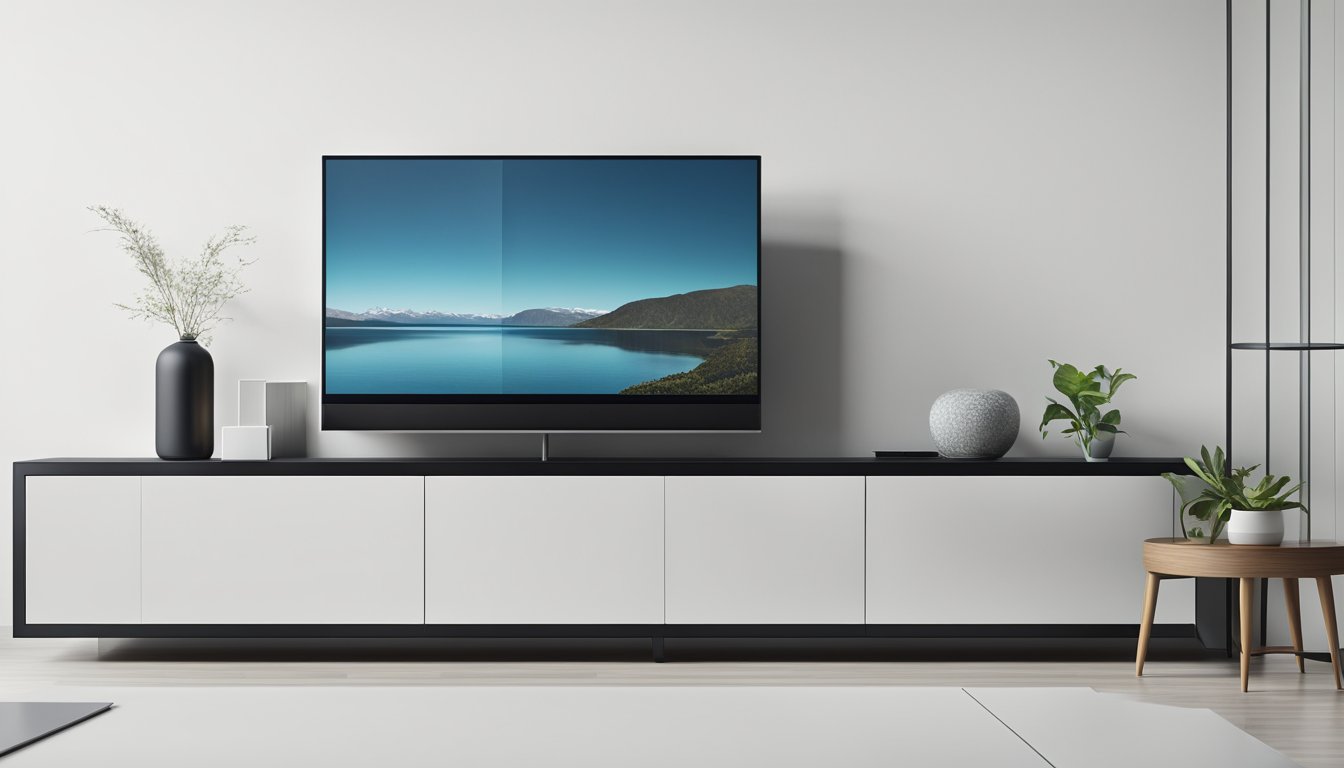
What is the best TV cabinet design for a small living room?
The best TV cabinet design for a small living room is low, practical, and proportionate to the wall. It should hold the television securely, keep devices accessible, hide cables neatly, and avoid blocking the main walkway.
Here is the position worth remembering: the best TV cabinet is not the one with the most storage, but the one that stores the right things without making the living room feel narrower. A large cabinet can look useful online, then dominate the room once the sofa, coffee table, fan, and dining area are in place.
| Living room need | Best TV cabinet direction | What to check first |
|---|---|---|
| Small HDB living room | Low TV console with closed storage | Walkway, sofa distance, wall length, and cable points |
| Long narrow living room | Slim console or wall-mounted feature wall design | Console depth and whether drawers can open fully |
| Tech-heavy setup | Cabinet with open shelves, cable holes, and ventilated sections | Router, soundbar, console, set-top box, and heat clearance |
| Family living room | Closed drawers and rounded or softer profiles where possible | Remote storage, toy clutter, cable safety, and cleaning access |
| Styled living room | Feature wall or display shelving around the TV | Visual balance, dusting, lighting, and whether decor distracts from viewing |
Start with the TV wall, not the cabinet style
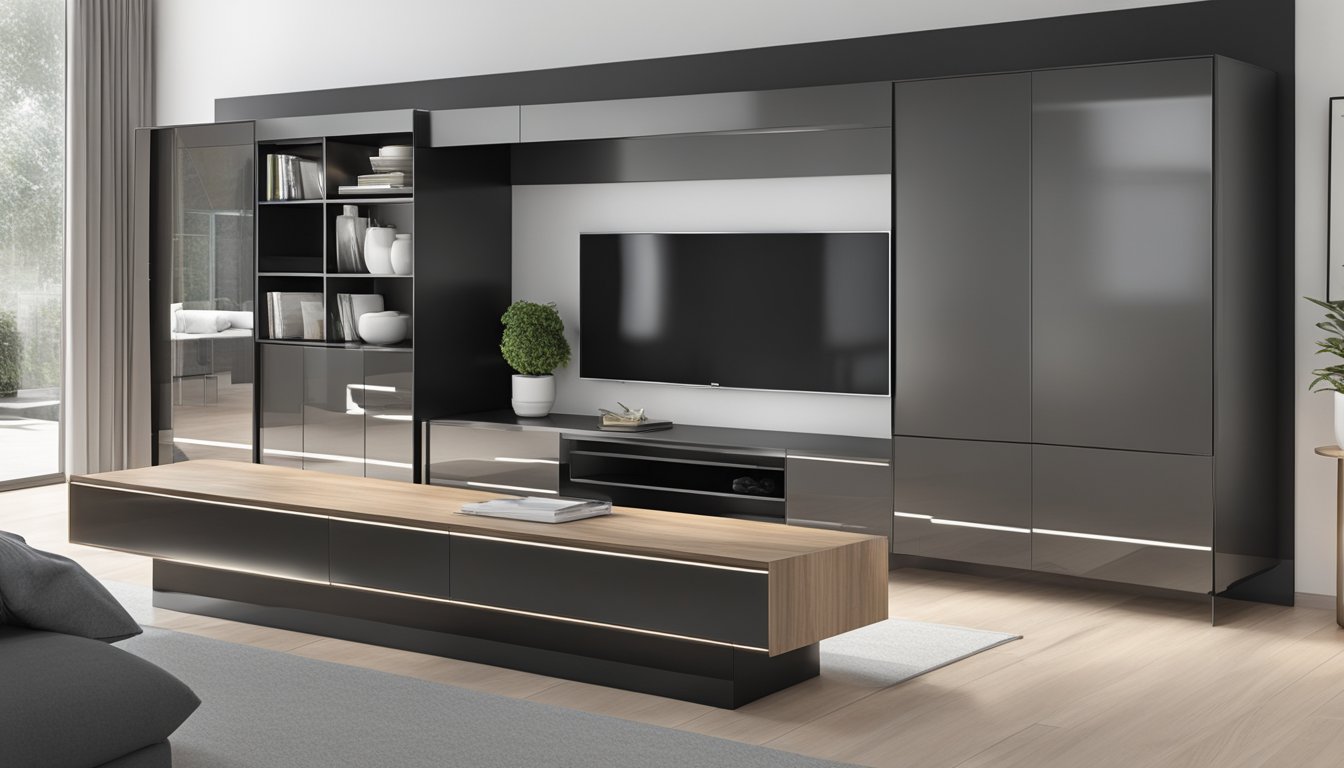
Measure the wall before choosing a TV cabinet. Check the width, power points, data points, window position, balcony door, ceiling fan swing, and where the sofa will sit. The cabinet should suit the wall and viewing zone, not just the product photo.
For compact homes, avoid cabinets that are too deep. The cabinet may fit against the wall, but the living room can still feel tight if drawers, doors, or people need to move in front of it. Keep the main walking path clear where possible.
Browse TV consoles for Singapore living rooms if you want to compare different widths, storage layouts, and finishes before deciding.
Choose storage by what you actually use
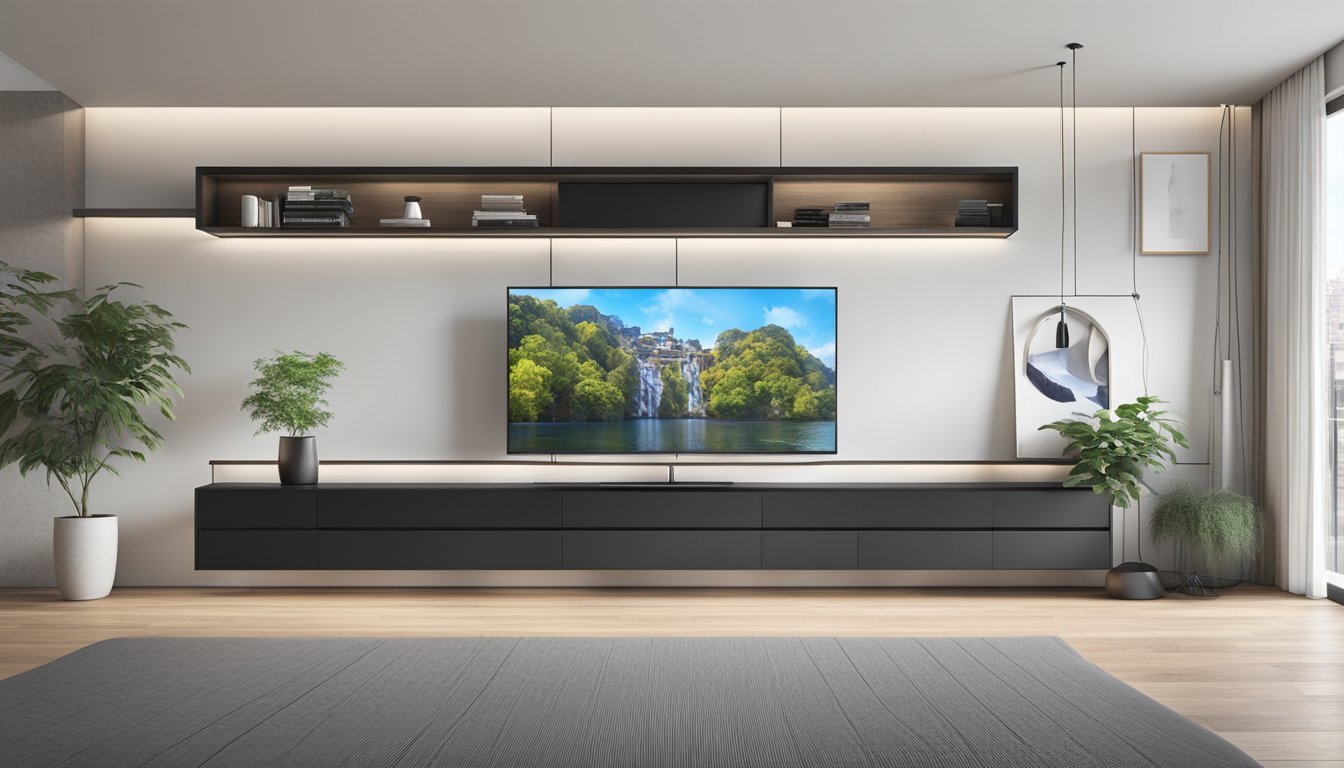
TV cabinet storage should match the household. A gamer needs space for consoles, controllers, charging cables, and discs. A family may need drawers for remotes, batteries, toys, board games, and everyday living room clutter. A minimalist home may only need a low console with cable access.
Closed storage keeps the living room calmer because it hides small items quickly. Open shelves are useful for devices that need remote signals, airflow, or daily access. A good TV cabinet design often uses both: closed drawers for clutter and open sections for electronics.
The honest trade-off is that fully closed cabinets look cleaner, but they can trap heat if electronics are placed inside without ventilation. Fully open shelves are easier for devices, but they show more dust and cables.
Plan cable management before delivery
Cables can make even a good TV cabinet look messy. Before buying, list every device that needs a plug or connection: TV, soundbar, router, game console, set-top box, streaming device, speaker, charger, and smart-home hub.
Check whether the cabinet has cable cut-outs, open backs, or enough space behind the unit. If the wall socket sits behind the cabinet, make sure it remains reachable. If you plan to wall-mount the TV, decide where the cables will run before drilling or installing a feature wall.
Do not force cables through tight gaps or block ventilation areas with bundled wires. Electronics need space to breathe, especially in warm living rooms without regular aircon.
Think about material and finish
TV cabinet material affects durability, cleaning, weight, and the way the living room feels. Wood-look finishes bring warmth. White or light finishes can make a compact room feel less heavy. Dark finishes can look grounded, but they may show dust more easily.
In Singapore humidity, material choice matters. Solid wood feels strong and warm, but it can move with humidity. Plywood is generally more dimensionally stable. MDF and particleboard can be budget-friendly, but they need care around moisture and spills.
| Material or finish | Good for | What to watch |
|---|---|---|
| Wood or wood-look finish | Warm modern, Japandi, Scandinavian, and family living rooms | Humidity, water marks, and matching with flooring |
| White or light finish | Small rooms and bright homes | Stains, scratches, and visible marks |
| Dark finish | Modern, contemporary, and larger living rooms | Dust visibility and whether it makes the wall feel heavy |
| Glass or glossy accents | Cleaner, lighter visual effect | Fingerprints, glare, and regular cleaning |
| Metal legs or handles | Industrial or modern styling | Rust risk in humid areas and floor protection |
Low console, floating cabinet, or feature wall?
A low TV console is the most flexible option for many homes because it can be moved, replaced, or paired with different screens later. It also works well for renters or homeowners who do not want fixed carpentry.
A floating TV cabinet can make the floor easier to clean and the wall feel lighter, but it needs proper wall support and installation. Do not assume every wall is suitable for mounting. Check the wall type, load, and installation requirements before committing.
A feature wall gives a more built-in look and can hide cables more neatly. It may suit renovation-stage homes where electrical points, mounting height, and storage are being planned together. Browse feature wall designs for living rooms if you want the TV area to feel more integrated.
When an extendable TV console makes sense
An extendable TV console can suit homes where the TV wall is long, but the layout may change later. It gives flexibility for different screen sizes, side decor, speakers, and storage needs.
Browse extendable TV consoles for flexible living room layouts if you want a cabinet that can adjust with the room. This is useful for young households that may upgrade the TV, rearrange the sofa, or move to a different flat later.
The trade-off is that extendable designs still need a clear wall and enough floor space. Measure the shortest and longest configuration before buying.
Style the TV cabinet without clutter
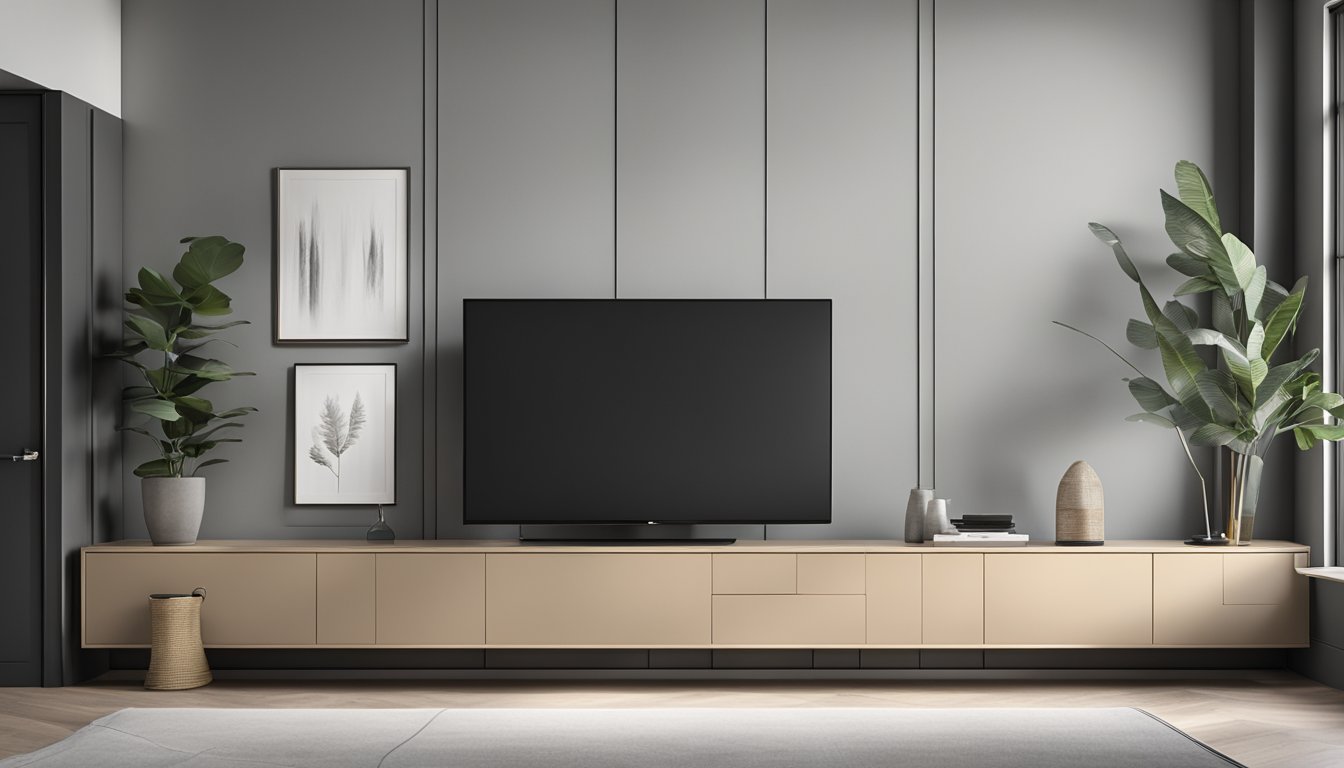
The TV area should feel calm because it is where your eyes rest during movies, shows, and games. Keep decor low and simple. Avoid placing tall objects where they block the screen or compete with the viewing area.
Good styling choices include a small plant, tray, books, low sculpture, or framed artwork placed away from the screen. If you use open shelving, keep items grouped instead of spreading small pieces across every shelf.
If you need display storage beside the TV, browse display units and bookshelves for living room storage. Use them beside the TV wall only if they do not make the entertainment area feel crowded.
Before you buy a TV cabinet online
Before checkout, measure the TV width, wall length, cabinet depth, sofa distance, walkway, door swing, lift opening, corridor turns, main door, and living room entry. A TV cabinet that fits the wall still needs to reach the living room.
Check these before ordering:
- TV size and stand width
- Cabinet width, height, and depth
- Drawer and door opening clearance
- Cable holes, open backs, and ventilation
- Router, soundbar, console, and set-top box space
- Material, finish, and cleaning needs
- Wall socket and data point location
- Delivery route through lift, corridor, and doorway
Complimentary delivery and professional assembly come with qualifying orders, which matters when a long TV console or feature wall component needs to pass through lifts, corridors, and narrow doorways. If something arrives damaged, the team at +65 6950-2657 sorts it locally during service hours, not through a distant returns process.
A growing share of Mega Furniture's furniture range now comes from its own factories in Batu Pahat, Johor and Foshan, Guangdong, both operational since late 2025. Quality checks happen in-house before pieces ship to Singapore, where delivery and professional assembly are handled locally. It is not the whole range yet, but the programme is expanding through 2028.
FAQs
What is the best TV cabinet design for a small living room?
The best TV cabinet design for a small living room is a low, slim console with enough closed storage for clutter, cable access for devices, and a depth that does not block the main walkway.
Should a TV cabinet be wider than the TV?
In most living rooms, the TV cabinet should be wider than the TV or at least visually balanced with it. This helps the TV area look grounded and gives space for devices, remotes, and cable management.
Is a floating TV cabinet better than a floor-standing console?
A floating TV cabinet can make the floor easier to clean and the room feel lighter, but it needs proper installation and wall support. A floor-standing console is more flexible and easier to move later.
What material is good for a TV cabinet in Singapore?
Plywood, engineered wood, wood-look finishes, and well-finished cabinet materials can work well. In humid homes, check edge finishing, moisture care, weight, and whether the surface is easy to clean.
How do I hide cables in a TV cabinet design?
Choose a cabinet with cable holes, open backs, or space behind the unit. Plan power points, router placement, soundbar position, and wall-mounted TV cables before delivery or installation.