


A walk in wardrobe HDB setup sounds like a dream, especially when your bedroom already feels full after adding a bed, bedside table, and work-from-home corner. The good news is that a small HDB flat can still have a neat wardrobe zone if the layout is planned carefully.
This guide covers how to plan a walk-in wardrobe in a small HDB, when a built in wardrobe HDB layout makes more sense, and how to choose a practical HDB wardrobe system that gives you storage without making the room feel cramped.
Quick answer: A walk in wardrobe HDB design can work if you have enough clearance for movement, good lighting, proper ventilation, and a storage layout that uses vertical space well. For very compact bedrooms, a built in wardrobe HDB setup, sliding door wardrobe, or modular wardrobe is often more practical than a full walk-in design. The best HDB wardrobe is not always the biggest one, but the one that keeps daily clothes easy to reach without blocking doors, windows, or walkways.
Can you build a walk-in wardrobe in a small HDB?
Yes, but it depends on your flat layout, bedroom size, storage needs, and whether you are comfortable giving up part of the room. A walk-in wardrobe needs more than cabinets. It needs enough space for you to stand, open drawers, reach hanging clothes, and move comfortably.
For some homes, the best solution is a compact walk-in nook. For others, a built-in wardrobe, sliding door wardrobe, or modular wardrobe will give better storage with less renovation work. Before deciding, measure the room carefully and think about how you use the bedroom every day.
Pros of having a walk-in wardrobe
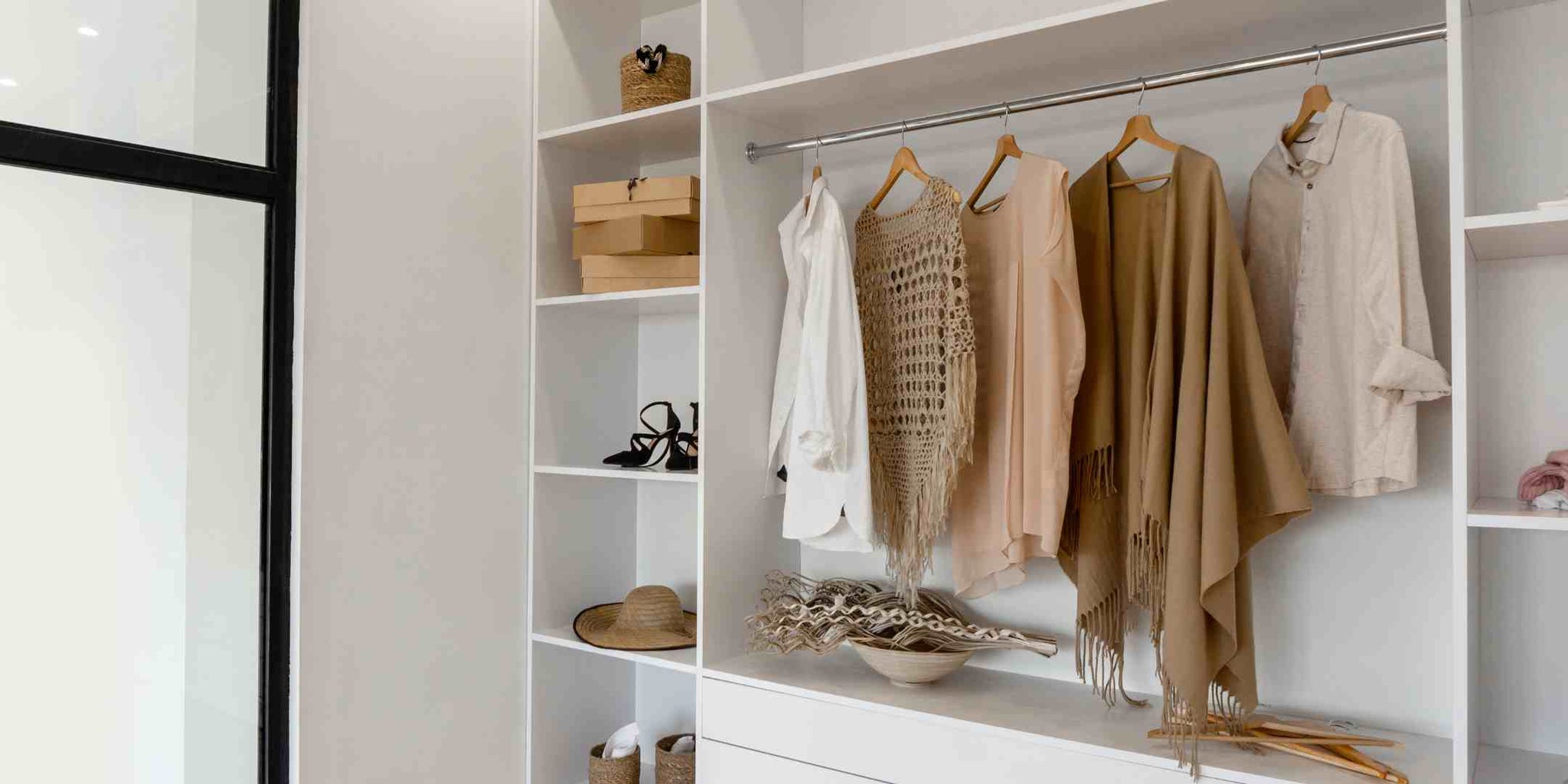
Better storage visibility
A walk-in wardrobe makes it easier to see clothes, bags, shoes, and accessories at a glance. This can reduce clutter because every item has a clearer zone.
More organised dressing area
When planned well, a walk-in wardrobe gives you a separate area for dressing, folding, ironing prep, or outfit planning. This can make mornings smoother.
Custom storage options
You can include hanging rods, open shelves, drawers, mirrors, lighting, baskets, hooks, and accessory storage based on your actual routine.
Cleaner bedroom look
By moving clothes and accessories into one dedicated zone, the main bedroom can feel calmer and less cluttered.
Cons of having a walk-in wardrobe
It uses valuable floor space
The biggest challenge is space. In many HDB bedrooms, building a walk-in wardrobe may mean reducing bed clearance, study space, or walking room.
It can cost more
A custom walk-in wardrobe may involve carpentry, lighting, partitions, electrical planning, and installation work. Costs can rise if the design is too complex.
It needs regular maintenance
A larger wardrobe area can still become messy if there is no system. Open shelving looks beautiful only when it is kept organised.
Ventilation matters
Closed wardrobe zones can trap humidity or musty smells if airflow is poor. This matters in Singapore’s humid climate, especially for clothes, bags, and leather accessories.
Walk-in wardrobe, built-in wardrobe, or modular wardrobe?
Before committing to a walk-in layout, compare it with other HDB wardrobe options. A full walk-in wardrobe is not always the smartest choice for a small room.
| Wardrobe type | Best for | Watch out for |
|---|---|---|
| Walk-in wardrobe HDB layout | Homes with spare bedroom space, a wider master bedroom, or a dedicated nook | Needs walking clearance, lighting, ventilation, and careful planning |
| Built in wardrobe HDB design | Homeowners who want a fitted, permanent storage wall | Harder to move or change later |
| Sliding door wardrobe | Compact bedrooms with limited door swing space | Corners may be less accessible |
| Open door wardrobe | Rooms with enough front clearance and full access needs | Doors need space to swing outward |
| Modular wardrobe | Flexible storage planning and changing wardrobe needs | Needs careful size planning so modules fit the room |
How to build a walk-in wardrobe in your small HDB
1. Assess your space first
Start by studying the available space in your HDB flat. Look for an underused corner, a section of the bedroom, a spare room, or an area beside the bed that can become a wardrobe zone without blocking the room’s main function.
Check door swings, window access, air-conditioning position, power points, and walking paths. The wardrobe should support your daily routine, not make the bedroom harder to use.
2. Plan the layout around daily habits
List what you actually need to store. This may include office wear, casual clothes, folded basics, bags, accessories, watches, jewellery, bedsheets, towels, and seasonal items.
For a practical HDB wardrobe, keep daily items at eye level and within easy reach. Use top shelves for less-used items, lower drawers for folded basics, and hanging rods for delicate or wrinkle-prone clothes.
3. Use vertical space
Small HDB rooms benefit from vertical storage. Tall shelves, double hanging rods, upper cabinets, and wall hooks can add storage without taking up extra floor space.
Keep heavier items at a comfortable height and avoid placing frequently used pieces too high. Storage should save space without becoming inconvenient.
4. Choose the right wardrobe materials
For daily-use wardrobes, choose materials and hardware that can handle repeated opening, closing, hanging, and sliding. Drawer runners, hinges, shelves, and hanging bars should feel stable and secure.
If you are planning a built in wardrobe HDB design, ask about board material, laminate or veneer finish, internal structure, hardware, moisture resistance, and after-installation support before confirming the work.
5. Add proper lighting
Good lighting makes a small walk-in wardrobe easier to use. Consider LED strip lights, recessed lighting, or motion-activated lights for darker corners.
Make sure the lighting does not create harsh shadows in front of the mirror. A wardrobe can be organised perfectly, but poor lighting will still make it hard to find items.
6. Decide between doors, curtains, or open access
Sliding doors are useful when you want to save space and keep the wardrobe zone enclosed. Curtains can create a softer and more flexible separation. Open access can make a small area feel less cramped, but it needs better discipline to stay neat.
For compact bedrooms, compare sliding door wardrobes and open door wardrobes before deciding on a full custom layout.
7. Create a light partition
A partition can help define the wardrobe zone, especially in a larger bedroom or open-plan layout. Glass, wood-look panels, curtains, or screens can separate the wardrobe without making the room feel too closed in.
Keep the partition slim and practical. A bulky partition can take away the space you were trying to gain.
8. Carve out a wardrobe nook
If a full walk-in wardrobe is not realistic, create a smaller wardrobe nook instead. Use an alcove, corner, or section of the bedroom with open shelving, hanging rods, drawers, and storage baskets.
This approach works well when you want the feel of a walk-in wardrobe without dedicating a whole room. It also helps maintain a more open bedroom layout.
9. Get help when structural changes are involved
If your plan involves hacking, electrical work, built-in carpentry, heavy partitions, or changes that may affect building rules, speak with qualified professionals before starting. HDB renovation work should be planned carefully and carried out according to the required rules and approvals.
For simpler storage changes, ready-made wardrobes in Singapore, modular wardrobes, and storage solutions may be easier and faster than a custom project.
Walk-in wardrobe organisation tips
Keep your wardrobe decluttered
Review your clothes and accessories regularly. Donate or pass on items you no longer wear so the wardrobe does not slowly become a storage room for things you forgot you owned.
Use storage bins and baskets
Storage bins help group smaller items such as scarves, bags, belts, undergarments, socks, and seasonal clothing. Choose labels or clear-front boxes if you tend to forget what is inside.
Use colour coordination only if it helps
Colour coordination can make the wardrobe look neat, but category grouping is usually more practical. You can organise by item type first, then colour within each section.
Rotate seasonal or less-used items
Keep daily pieces in prime zones and move occasional wear, luggage items, spare bedding, and festive clothes to higher shelves or less-accessed corners.
Use shoe racks and hooks
Shoe racks, hooks, and small organisers can free up shelf space. Hooks work well for belts, handbags, caps, and scarves. Just avoid overloading them, or the wardrobe can start to feel messy again.
When a built-in wardrobe may be better than a walk-in wardrobe
A built-in wardrobe may be better if your bedroom is too small for comfortable walking clearance. A wall-to-wall built-in design can give you plenty of storage while keeping the room more open.
For a small flat, a built in wardrobe HDB layout can also work better when you need a clean storage wall, sliding doors, internal drawers, and custom compartments without taking over the room.
If you prefer flexibility, a modular wardrobe may be a better middle ground. You can adjust storage over time and avoid a fully fixed carpentry solution.
Complete your HDB bedroom setup
Before finalising your wardrobe, compare it with your bed, bedside table, dressing table, and walking space. Browse bedroom furniture to plan the whole room together, not just the wardrobe wall.
If your room is tight, consider storage beds to reduce pressure on the wardrobe. This can free up space for clothes, bags, and accessories inside the cabinet.
Final thoughts
A walk in wardrobe HDB design can work beautifully when space, lighting, ventilation, and storage zones are planned properly. But for many compact bedrooms, the smartest answer may be a built-in wardrobe, modular wardrobe, or sliding door wardrobe instead of a full walk-in layout.
The goal is not to copy a large showroom-style wardrobe. The goal is to create an HDB wardrobe that fits your routine, protects your clothes, keeps the bedroom easy to move around in, and stays organised after daily use.
Walk In Wardrobe HDB FAQs
Can I build a walk in wardrobe HDB layout in a small flat?
Yes, but it depends on your bedroom size, walking clearance, storage needs, and layout. A compact walk-in nook may work better than a full room-style walk-in wardrobe for many small HDB flats.
Is a built in wardrobe HDB design better than a walk-in wardrobe?
A built in wardrobe HDB design can be better for very compact bedrooms because it uses the wall efficiently without needing extra walk-in clearance. A walk-in wardrobe works better when you have enough spare space to move comfortably.
What is the best HDB wardrobe for a small bedroom?
The best HDB wardrobe for a small bedroom is usually a sliding door wardrobe, modular wardrobe, or fitted wardrobe layout that uses vertical space and does not block the walkway, windows, or room doors.
How much space do I need for a walk-in wardrobe?
You need enough space to stand, turn, open drawers, reach hanging clothes, and move without blocking the bed or doorway. Measure the room carefully before deciding because every HDB layout is different.
How do I make a walk-in wardrobe feel less cramped?
Use vertical storage, light colours, slim partitions, mirrors, LED lighting, open shelves, and clear zones for daily items. Avoid overfilling the wardrobe, especially if the space is narrow.
Should I use doors or curtains for a small HDB wardrobe area?
Sliding doors are good when you want a cleaner enclosed look. Curtains are softer and more flexible. Open access can make the area feel bigger, but it needs more upkeep to stay neat.