


Choosing between a top loader or front loader is really about how your household does laundry, how much space your service yard has, and how much you value water savings, fabric care, loading comfort, and drying speed. For many Singapore homes, a front load washer is better for water efficiency, fabric care, and stackable planning, while a top load washer is better for easier upright loading, shorter everyday cycles, and simple access.
This guide explains the difference between top load and front load washing machine designs, then helps you compare both options by space, water use, wash action, capacity, comfort, cleaning, noise, price, and delivery fit for HDB, BTO, condo, resale, and family homes.

Quick Answer: Is Front Load or Top Load Washing Machine Better?
A front load washing machine is usually better if you want gentler fabric care, lower water use, stronger spin performance, and the option to place a dryer above it where the layout allows. A top load washing machine is usually better if you want easier loading from above, less bending, simpler use, and a machine that may be easier to pause and add laundry to during selected cycles.
The clear position: do not choose by washer type alone. A well-sized, water-efficient top load washer can be better for a compact service yard than a front loader whose door cannot open properly. A good front loader can be better for a family that wants fabric care, lower water use, and neater laundry planning. The better washer is the one that fits your space and routine.
Top Load vs Front Load Washing Machine at a Glance
| Factor | Top Load Washer | Front Load Washer |
|---|---|---|
| Loading style | Clothes go in from the top | Clothes go in from the front |
| Best for | Easy access, upright loading, quick daily laundry, and simple use | Water efficiency, gentler washing, stronger spin, and stackable planning |
| Space check | Needs vertical clearance for the lid | Needs front clearance for door swing and loading |
| Typical wash action | Uses an agitator, impeller, or high-efficiency top-load motion | Uses tumbling action through a horizontal drum |
| Water use | Traditional models may use more water, though high-efficiency models vary | Often uses less water because clothes tumble through a smaller water volume |
| Fabric care | Can be practical for daily loads, but agitator models may be tougher on clothes | Often gentler because clothes tumble instead of being pulled around an agitator |
| Adding forgotten items | Often easier, depending on cycle and safety lock | Depends on model, cycle stage, and add-item feature |
| Maintenance | Usually straightforward, with lid and filter access to check | Needs door gasket, detergent drawer, and drum care to prevent odours |
What Is the Difference Between Top Load and Front Load Washing Machine Designs?
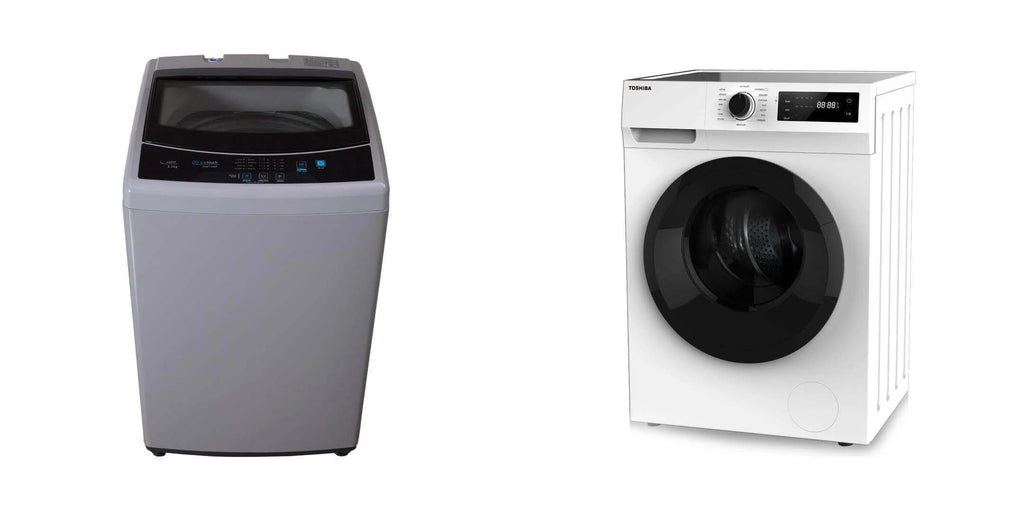
The main difference is how the drum is positioned and how you load laundry. A top load washer opens from the top. The drum sits vertically, and clothes are moved by an agitator, impeller, or high-efficiency wash motion. You usually stand upright while loading and unloading.
A front load washer opens from the front. The drum sits horizontally, and clothes tumble through water during the wash cycle. This design often uses less water and can be gentler on fabrics because clothes are lifted and dropped instead of being twisted around a centre agitator.
For Singapore homes, the difference is not just technical. It affects where the washer can sit, how the lid or door opens, whether you can stack a dryer, how comfortable loading feels, and how much floor or front clearance your service yard needs.
When a Top Load Washer Makes More Sense
You prefer standing while loading laundry
A top load washer is easier for people who do not want to bend often. You can place clothes in from above, which may feel more comfortable for some older users, busy parents, or anyone who finds front-loading awkward.
Your service yard has enough lid clearance
Top load washing machines need space above the machine so the lid can open fully. This matters if the washer sits under shelves, cabinets, a window ledge, a laundry rack, or storage items.
You want simple daily washing
Top loaders are often chosen for simple household routines such as uniforms, towels, gym clothes, children’s clothes, and regular weekday loads. Many shoppers like the familiar controls and easy access.
You may need to add forgotten clothes
Depending on the model and safety lock, top loaders may make it easier to add a forgotten shirt or towel during a cycle. Always check the specific product because safety locks and water levels vary by model.
You wash bulky loads often
Some top load washers feel convenient for towels, bedsheets, and larger family loads because the opening is wide and accessible from above. Check drum capacity, wash programme, and whether the machine handles bulky items well.
When a Front Load Washer Makes More Sense
You want better water efficiency
Front load washers often use less water than traditional top load washers because the tumbling action does not require the drum to fill as deeply. In Singapore, check the PUB WELS water efficiency label when comparing household washing machines.
You want gentler fabric care
Front loaders are often chosen for clothes that benefit from a gentler wash action. The tumbling motion can be kinder to fabrics than some agitator-style top loaders, especially for workwear, delicate items, and everyday clothes you want to keep looking better for longer.
You need stackable planning
A front load washer can suit homes that want to place a dryer above the washing machine, provided the model, stacking kit, ventilation, and installation plan allow it. This can help in compact service yards where floor space is limited.
You want stronger spin performance
Many front loaders offer higher spin speeds, which can remove more water from clothes before drying. This is useful during rainy periods or in homes that rely on indoor drying.
You prefer a cleaner built-in look
Front loaders can work neatly under counters or in laundry cabinets when the layout is planned well. Check door swing, ventilation, hose access, and service access before enclosing any washer.
Which Washer Is Better for HDB, BTO, and Condo Service Yards?

Both types can work in Singapore homes. The best choice depends on the service yard layout.
Choose a top load washer if your floor space is tight but you have clear height above the washer. It can suit households that want easy loading and do not plan to stack a dryer above the machine.
Choose a front load washer if you have enough front clearance for the door and want better water efficiency, gentler washing, or dryer stacking. It may also suit a neater laundry-cabinet setup if ventilation and access are planned properly.
As a practical guide, many washing machines are around 60cm wide and 60cm deep, but you should still check the exact product dimensions. Handles, hoses, door swing, lid swing, wall spacing, and floor traps can change the real fit.
Top Loader or Front Loader by Household Type
| Household | Better Starting Point | Why |
|---|---|---|
| Single or couple | Compact top load or compact front load washer | Lower capacity may be enough if laundry loads are small |
| Family of three to four | Front load or larger top load washer | Needs enough capacity for clothes, towels, uniforms, and bedding |
| Family with children | Larger washer with quick wash and strong rinse options | Frequent laundry needs simple programmes and reliable capacity |
| Older users | Top load washer or front load washer on a pedestal | Loading comfort matters if bending is difficult |
| Small service yard | Depends on clearance | Top loaders need lid space, while front loaders need door space |
| Homes without strong sun exposure | Front load washer or washer-dryer setup | Higher spin speed and dryer planning can help indoor drying |
Water Efficiency and WELS Labels
Water use matters in Singapore because washing machines are used regularly. PUB’s Mandatory Water Efficiency Labelling Scheme covers household clothes washing machines with 2, 3, and 4-tick ratings. A higher tick rating indicates better water efficiency.
When comparing top load vs front load washing machine options, check the WELS label, water consumption, load capacity, and wash programmes. Do not compare tick rating without capacity. A large washer and compact washer serve different households, so the right comparison is between models that match your actual load size.
Capacity: How Many Kilograms Do You Need?
Washer capacity is usually shown in kilograms. It should match household size, laundry frequency, and the type of items you wash. A small household may be fine with a compact model, while a family may need a larger drum for school uniforms, towels, bedsheets, and weekly loads.
| Household Size | Capacity Starting Point | Notes |
|---|---|---|
| One to two people | 6kg to 7kg | Good for regular clothes and smaller loads |
| Three to four people | 7kg to 9kg | Better for mixed weekly laundry, towels, and uniforms |
| Five or more people | 9kg to 12kg or more | Useful for heavier laundry routines and bedding |
| Frequent bedding and towels | Larger drum recommended | Check bulky-wash programme and drum size, not only kg rating |
The old rule still holds: capacity depends on lifestyle. A couple that washes bulky bedding often may need more capacity than a family that separates loads across the week.
Washing Performance: Which Cleans Better?

Both front load and top load washers can clean well when used correctly. Detergent amount, load size, water level, cycle choice, fabric type, and maintenance all affect cleaning results.
Front loaders often clean well with less water because clothes tumble through the drum. They can suit households that wash office wear, school uniforms, activewear, and delicate fabrics. Top loaders can also clean daily laundry well, especially when the model has suitable wash cycles, strong rinse performance, and the right drum design.
Do not overload either machine. Clothes need room to move. An overloaded washer can leave detergent residue, trap lint, and reduce cleaning performance.
Drying and Spin Speed
Spin speed matters because it affects how wet clothes feel at the end of the wash. A stronger spin can reduce drying time, which helps during rainy weeks or in homes where laundry dries indoors.
Front loaders often have stronger spin performance, but check the exact model. Higher spin speed can be useful, but it may also increase noise or wrinkles on selected fabrics. For delicate clothes, choose the correct cycle rather than always using the highest spin.
Noise and Vibration
Noise matters if the washer sits near a bedroom, living room, or work-from-home corner. Front loaders can spin fast, so levelling and installation matter. Top loaders can also be noisy if the load is unbalanced or the floor is uneven.
Before buying, check noise level where listed, spin speed, installation requirements, and whether the service yard flooring is level. During use, balance loads and avoid washing one heavy item alone, such as one thick bath mat or one blanket.
Maintenance: Top Load Washer vs Front Load Washer
Top load washer maintenance
Top loaders are usually easy to air after use because the lid opens upward. Check lint filter access, drum cleaning instructions, detergent guidance, and whether the machine has a tub-clean cycle.
Front load washer maintenance
Front loaders need regular care around the rubber door gasket, detergent drawer, and drum. Leave the door slightly open after washing where safe, wipe the gasket, and run drum-clean cycles as recommended. This helps reduce musty smells in humid laundry areas.
What to Measure Before Buying
- Washer width, depth, and height
- Front door swing for front load washers
- Top lid clearance for top load washers
- Water inlet and drainage point
- Power socket location
- Nearby walkway and standing space
- Cabinet, shelf, or laundry rack clearance
- Lift opening, corridor width, doorway, and tight turns
- Dryer stacking space if choosing a front load washer and dryer setup
- Maintenance access for filters, hoses, and cleaning
Measure the washer in use, not only when closed. A front loader needs room for the door to swing open. A top loader needs the lid to open without hitting a shelf, rack, or cabinet.
Common Washer Buying Mistakes to Avoid
Choosing by price only
A cheaper washer may work well, but compare capacity, water efficiency, wash programmes, noise, spin speed, warranty, and installation needs before deciding.
Forgetting the service yard layout
The best washer on paper can be wrong if the lid, door, hose, or walkway does not fit your laundry corner.
Buying too much capacity
A larger drum is useful for families, but oversized washers take more space and may not be needed for smaller households. Match capacity to your real loads.
Ignoring WELS ratings
Water efficiency matters for regular laundry. Check the WELS label and compare similar-capacity models.
Not planning for drying
Washer choice affects drying. Front loaders often spin clothes drier. Washer-dryers save space but have drying-capacity trade-offs. Separate dryers need more room but may suit frequent laundry households.
Where to Buy Top Load and Front Load Washing Machines in Singapore

Browse washing machines and dryers at Mega Furniture to compare washing machine, dryer machine, washer-dryer, and laundry dryer options for HDB, BTO, condo, resale, and family homes.
You can also explore top load washing machines if you want upright loading, simple access, and easier daily laundry handling. Compare front load washing machines if you want efficient washing, front access, gentler fabric care, and stackable planning where the layout allows.
If you are upgrading more than one area of the home, browse major appliances and home appliances to compare refrigerators, dryers, ovens, air conditioners, kitchen appliances, and other daily-use essentials.
Before checkout, confirm product availability, current price, model number, dimensions, capacity, WELS rating, water use, spin speed, installation needs, delivery lead time, warranty, old appliance disposal options, and after-sales process. Appliance brands are sourced rather than made in Mega Furniture’s own furniture factories, so the buying value comes from product selection, Singapore delivery, and local support.
Delivery, installation, and after-sales support are handled locally, with the service team reachable at +65 6950-2657 from Monday to Friday, 9am to 6pm, or by email at enquiry@megafurniture.sg. Mega Furniture also has two current showrooms: Mega Furniture Prestige at 134 Joo Seng Road, Level 2, Singapore 368359, open daily from 11:30am to 9pm, and Mega Furniture at Giant Tampines, 21 Tampines North Drive 2, #03-01, Singapore 528765, open daily from 10am to 10pm.
Top Load vs Front Load Washing Machine FAQs
Is front load or top load washing machine better?
A front load washing machine is usually better for water efficiency, gentler fabric care, stronger spin performance, and stackable planning. A top load washing machine is usually better for easier upright loading, simple access, and households that prefer not to bend while doing laundry.
What is the difference between top load and front load washing machine designs?
A top load washing machine opens from the top and usually has a vertical drum. A front load washing machine opens from the front and has a horizontal drum that tumbles clothes through water during the wash cycle.
Is a top load washer good for HDB homes?
Yes, a top load washer can work well in HDB homes if the service yard has enough floor space and vertical clearance for the lid to open fully. Measure shelves, laundry racks, windows, and cabinets above the machine before buying.
Is a front load washer good for small service yards?
Yes, a front load washer can work in small service yards if there is enough front clearance for the door, loading, unloading, and maintenance. It can also support dryer stacking where the model, stacking kit, and installation plan allow it.
Which washer uses less water?
Front load washers often use less water than traditional top load washers, but exact water use depends on the model. In Singapore, check the PUB WELS label and compare similar-capacity machines before buying.
Which washer is gentler on clothes?
Front load washers are often gentler because clothes tumble through the drum instead of being moved around a central agitator. However, some high-efficiency top load washers can also be gentle when the right cycle is used.
Which washer is easier to load?
A top load washer is usually easier to load while standing because the lid opens from above. A front load washer may require bending unless it is placed on a pedestal or raised platform designed for the model.
Can I add clothes mid-cycle?
Some top load washers make it easier to add forgotten items during a cycle, but this depends on the water level and safety lock. Some front load washers also have add-item features, depending on the model and cycle stage.
What capacity washing machine should I buy?
One to two people may suit 6kg to 7kg. Three to four people often suit 7kg to 9kg. Larger families or homes that wash bedding and towels often may need 9kg to 12kg or more. Choose based on load habits, not household size alone.
Which is better, top loader or front loader, for families?
A front loader may suit families that want water efficiency, fabric care, and strong spin performance. A top loader may suit families that want easy loading, simple access, and regular quick washes. The better choice depends on service-yard space, laundry frequency, and drying routine.
Do top load washers have agitators?
Not all top load washers have agitators. Some use a central agitator, while others use an impeller or high-efficiency wash motion. Check the product details before ordering.
Where can I buy top load and front load washing machines in Singapore?
You can compare top load washing machines, front load washing machines, washer-dryers, dryers, and laundry appliances at Mega Furniture. Check dimensions, capacity, WELS rating, water use, spin speed, delivery, installation, and warranty before checkout.