


Quick answer: The best small fan for kitchen use is one that improves airflow without interfering with the hob, cooker hood, cabinets, lighting, or daily movement. In most Singapore kitchens, a compact ceiling fan, corner fan, or remote-control fan works best when it supports ventilation instead of replacing the cooker hood. Choose the fan after checking ceiling height, installation point, blade clearance, heat exposure, and how you actually cook.
Renovation has just started, and the kitchen drawings look neat until the fan, lights, hood, top cabinets, and service-yard door all want the same ceiling space. This is where a “small fan” becomes a layout decision, not just an appliance purchase.
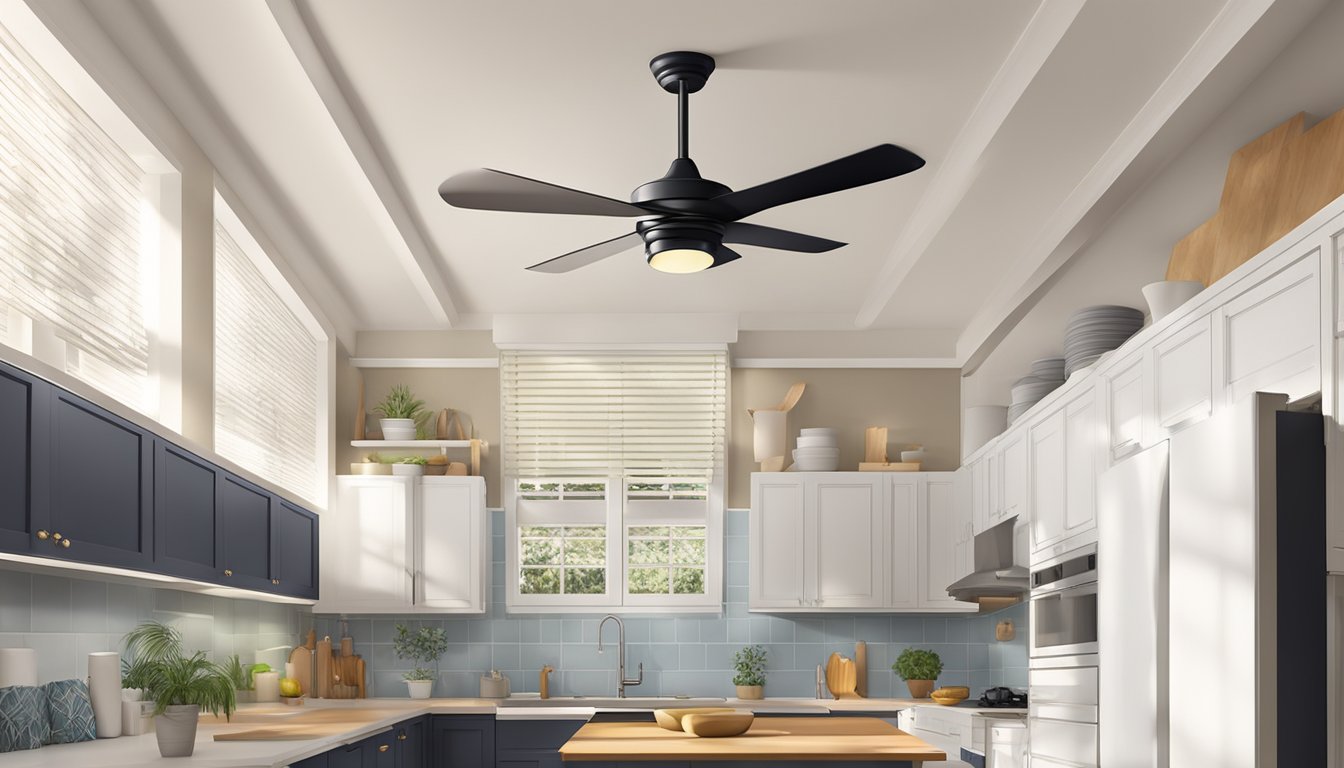
What small fan for kitchen use works best in Singapore?
For a compact HDB or condo kitchen, choose a small ceiling fan if the ceiling has enough safe mounting space and the blades will not clash with cabinets, pendant lights, or upper storage. Choose a corner fan if ceiling space is limited. Choose a remote-control fan if the switch point is awkward or you want easier speed adjustment while cooking.
Here is the practical position: a kitchen fan should help with comfort and airflow, but it should not be treated as a substitute for a cooker hood. A fan moves air around. A hood helps manage cooking fumes, grease, smoke, and smell at the source. In a real kitchen, the best setup often uses both, planned properly.
If you are comparing options, start with ceiling fans for Singapore homes, then narrow the choice by kitchen size, mounting location, and control type.
Kitchen fan options compared
| Fan type | Best for | Watch out for |
|---|---|---|
| Small ceiling fan | Compact kitchens with clear ceiling space and enough blade clearance. | May clash with top cabinets, lights, or hood placement if planned too late. |
| Corner fan | Kitchens where the centre ceiling is crowded or too close to cabinets. | Airflow direction matters, so place it where it helps the cooking zone without blowing heat at your face. |
| Ceiling fan with light | Small kitchens that need airflow and overhead lighting from one fixture. | Check whether the light is bright enough for food prep and cleaning. |
| Remote-control fan | Homes where the fan switch is hard to reach during cooking. | Keep the remote accessible, not hidden in the same drawer as expired batteries. |
| Wall or portable fan | Rental homes or kitchens where ceiling installation is not possible. | Must be placed away from water, heat, grease, and busy walkways. |
Choose the fan based on kitchen layout
Galley kitchen
A galley kitchen usually has two parallel runs of cabinets or appliances. In this layout, a fan should support airflow along the length of the kitchen without blocking cabinet doors or making the narrow walkway feel busier.
A compact ceiling fan may work if the ceiling is clear. If the ceiling is already crowded with lights, pipes, or upper cabinets, a corner fan may be the cleaner solution.
L-shaped kitchen
An L-shaped kitchen gives you more flexibility because the cooking and prep zones often sit on different runs. Place the fan where it improves comfort without blowing directly across the hob flame or spreading cooking fumes away from the cooker hood.
If the kitchen opens into the dining area, avoid sending hot air and cooking smell straight into the eating zone. Airflow should help the room breathe, not move the problem elsewhere.
Open-plan kitchen
Open-plan kitchens need more careful planning because the living and dining areas sit nearby. A small fan can help reduce stuffiness, but smell and grease control still belong to the hood and overall ventilation plan.
For open layouts, pair the fan decision with cooker hoods for kitchen ventilation so comfort and cooking performance are planned together.
Check ceiling height, blade clearance, and cabinets
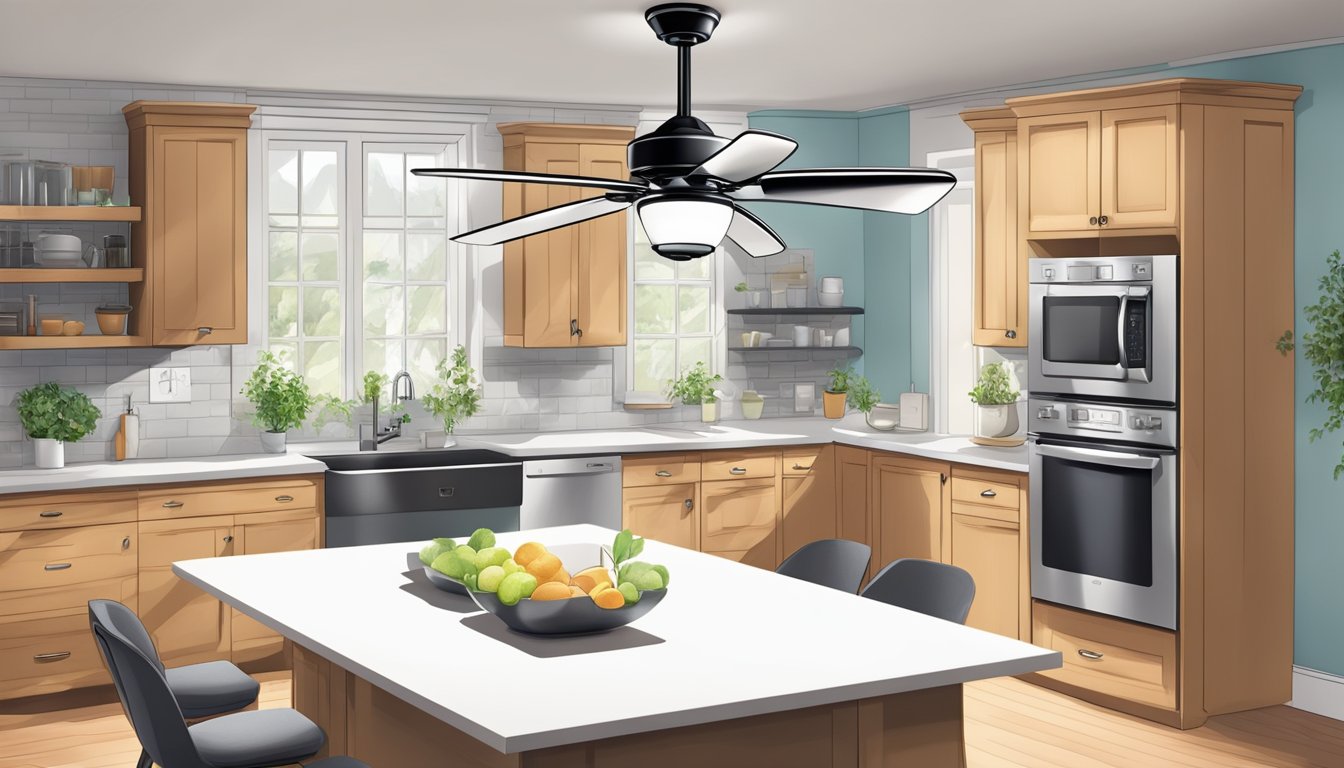
A kitchen fan should never feel like it is fighting the room. Check the ceiling height, fan diameter, mounting type, blade position, cabinet door swing, and light placement before ordering. If your top cabinets reach close to the ceiling, the fan may need to sit away from the storage run or be replaced with a corner fan.
Low ceilings need extra care. A low-profile or compact model may be more suitable than a larger fan with a downrod. If the kitchen has beams, ducting, or exposed services, confirm the fixing point before assuming a fan can go in the centre.
If you want easier control in a tight kitchen, browse ceiling fans with remote control and check whether the remote, speed settings, and timer suit your cooking routine.
Should a kitchen fan have a light?
A fan with light can be useful in a small kitchen because it combines two functions in one ceiling point. This is practical when the ceiling has limited space for separate fittings.
The trade-off is task lighting. Kitchen lighting needs to be bright and even enough for chopping, cleaning, and checking whether the pan is actually clean. A fan light may support general lighting, but under-cabinet lighting or focused task lighting may still be needed near the countertop.
Compare ceiling fans with lights if your kitchen needs both airflow and overhead brightness.
Plan the fan with the hob and hood
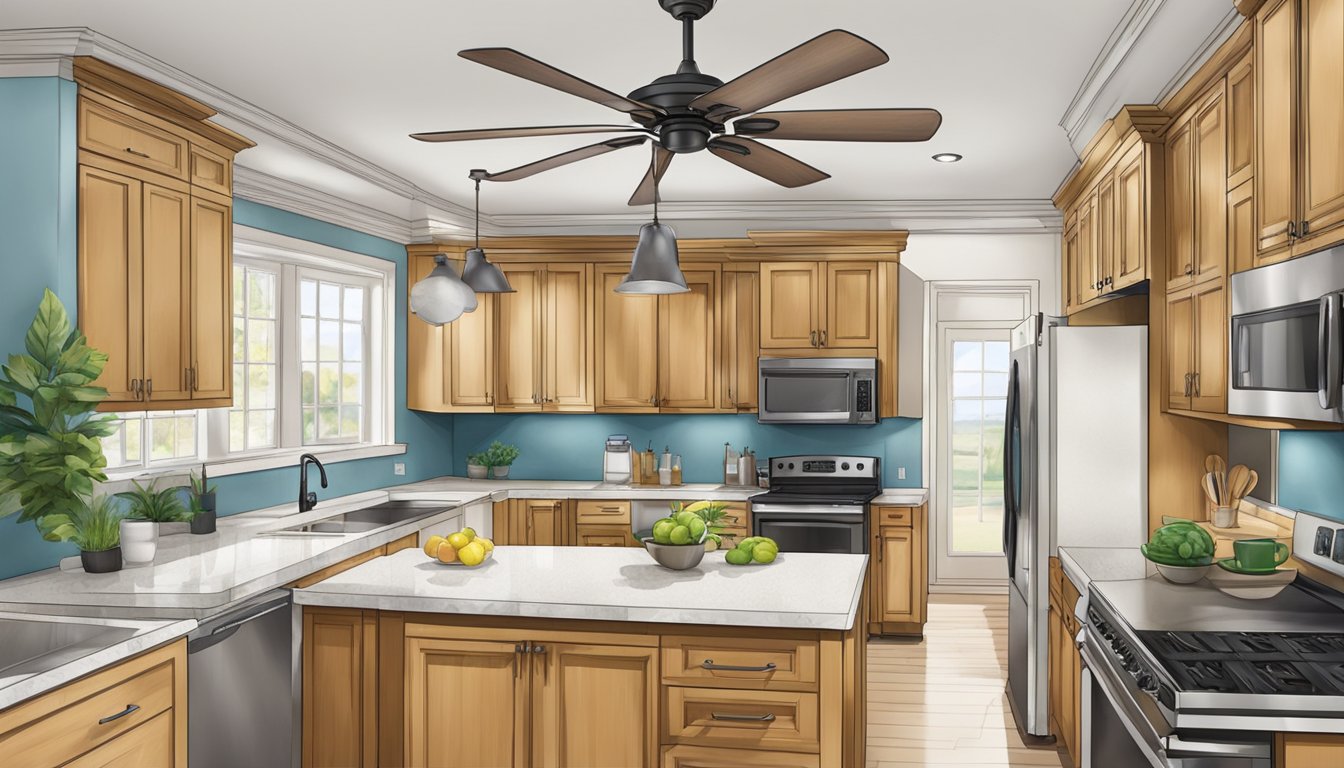
The fan should not blow cooking fumes away from the hood before the hood can capture them. This matters for frying, stir-frying, and everyday cooking with oil. If the fan sits too close to the hob or points across the cooking zone, it can make the kitchen feel cooler while making smell and grease harder to manage.
Place the fan where it supports comfort in the standing area, not directly over the most intense heat and grease. The hob, hood, light, and fan should be planned as one cooking zone. If each item is chosen separately, the ceiling and countertop can become crowded very quickly.
For cooking-zone planning, check hobs for Singapore kitchens before finalising the fan and hood positions.
Installation and safety considerations
Kitchen fans are installation-heavy because they involve electrical points, secure mounting, moving parts, and heat-prone surroundings. If new wiring, rewiring, or electrical extension work is needed, engage a licensed electrical worker. Do not treat a ceiling fan like a loose plug-in gadget if it needs ceiling mounting and wiring.
Before installation, confirm the mounting surface, electrical point, wall switch or remote-control setup, and whether the fan position leaves enough space for cabinets and doors to open. If you live in a condo, also check management rules before drilling or making electrical changes.
Before you buy a small fan for the kitchen
Measure the kitchen width, ceiling height, cabinet depth, hob position, hood position, and walkway. Open every top cabinet door. Stand at the hob. Pretend you are cooking a normal dinner. If the fan location feels awkward in that simple test, it will feel worse after installation.
Choose a small fan if the kitchen feels warm but still has a safe, practical mounting point. Choose a corner fan if the ceiling is crowded. Choose a fan with light if ceiling space is tight and the light output suits the room. Skip the ceiling fan if the kitchen is too cramped, too low, or too close to heat and grease for comfortable use.
Every order ships locally, and after-sales support is handled from Singapore. Complimentary delivery and professional installation are available on qualifying orders. The team is reachable at +65 6950-2657, Monday to Friday, 9am to 6pm.
FAQs about choosing a small fan for kitchen use
Can I install a small ceiling fan in an HDB kitchen?
Yes, a small ceiling fan can work in an HDB kitchen if there is enough ceiling space, safe mounting support, blade clearance, and proper electrical installation. Check the hob, hood, cabinet, and lighting positions before deciding.
Is a ceiling fan better than a cooker hood in the kitchen?
No. A ceiling fan and cooker hood do different jobs. A fan improves airflow and comfort, while a cooker hood helps manage smoke, grease, and cooking smell near the hob.
What fan is best for a very small kitchen?
A compact ceiling fan, corner fan, or wall-mounted fan may work best, depending on ceiling space and layout. Choose the option that keeps the walkway clear and does not interfere with cabinets, the hob, or the hood.
Should I choose a kitchen fan with light?
Choose a kitchen fan with light if the ceiling has limited space and you need both airflow and general lighting. Check whether the light is bright enough for food prep, because some kitchens still need extra task lighting.