


For most Singapore bedrooms, an aircon or portable AC is the stronger choice because it actually lowers room temperature and removes humidity. An air cooler is better for short, low-cost cooling in open or well-ventilated spaces, but it will not feel like air conditioning in a humid HDB room.
The renovation is done, the walls are fresh, and the afternoon heat is now the loudest thing in the flat. Before buying an indoor air cooler, portable air cooler, portable AC, or full aircon system, it helps to know what each one can realistically do in Singapore’s climate.
Air Cooler vs Aircon: The Simple Difference

An air cooler uses water evaporation and a fan to push out cooler-feeling air. It does not use refrigerant, does not need a compressor, and does not remove much moisture from the room. This makes it portable, lower-cost, and easier to move around the home.
An aircon uses refrigerant and a compressor to cool the air. More importantly for Singapore, it also removes moisture. That is why an air-conditioned room feels drier, cooler, and more comfortable than a room with only a fan or portable cooler.
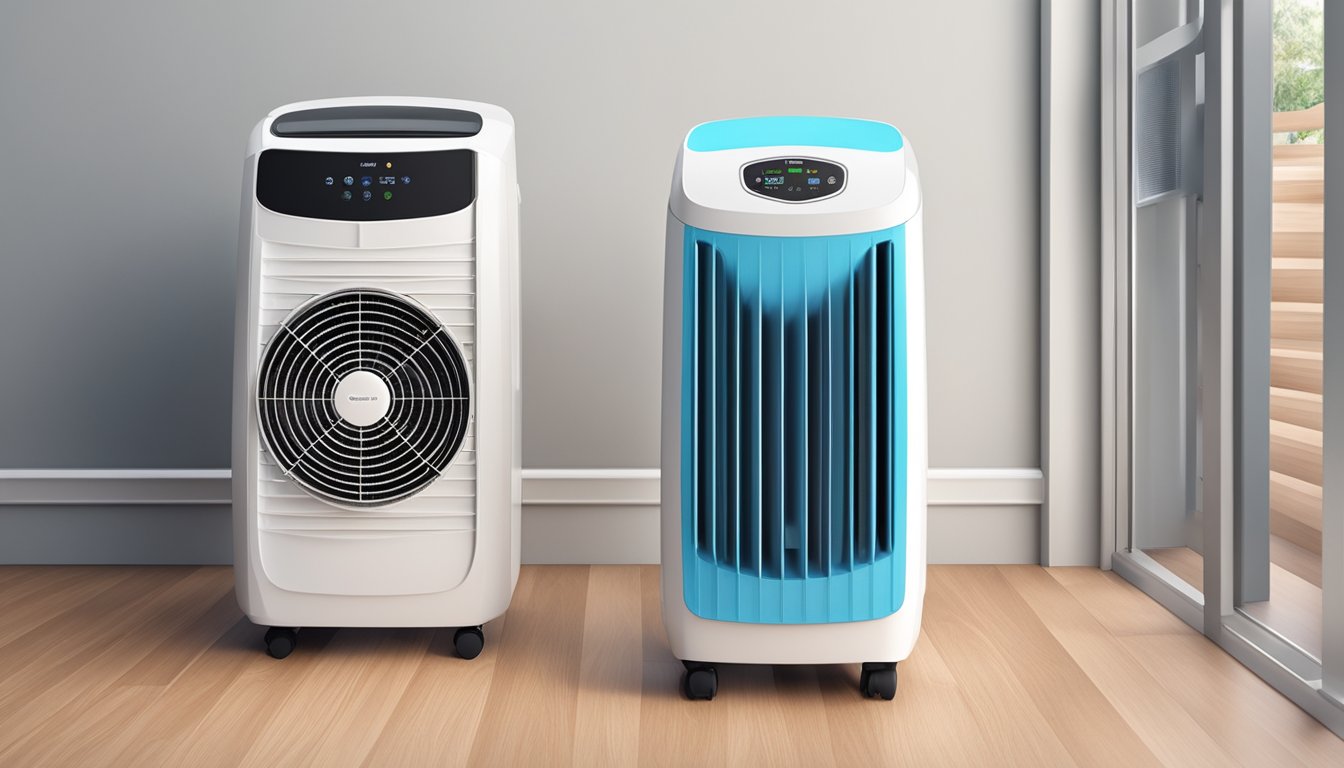
A portable air conditioner sits between the two. It works more like an aircon than an evaporative cooler, but it is movable and usually uses an exhaust hose to vent hot air out through a window or opening.
Air Cooler vs Air Conditioner: Which One Should You Choose?
| Cooling Option | Best For | Main Limitation |
|---|---|---|
| Indoor air cooler | Open living areas, short cooling sessions, renters, and light daytime use | Less effective in high humidity and does not cool like aircon |
| Portable air cooler | Flexible spot cooling near a sofa, study desk, or dining area | Needs water refilling and good ventilation |
| Portable AC | Bedrooms, temporary cooling, rental homes, and rooms without installed aircon | Needs an exhaust setup and takes up floor space |
| Installed aircon | Bedrooms, master rooms, family use, and long nightly cooling | Needs installation, servicing, and higher upfront planning |
If the room is closed, humid, and used for sleeping, choose aircon or portable AC. If the room is open, breezy, and you only need relief while working or relaxing, an air cooler can be enough.
How an Air Cooler Works

An air cooler pulls warm air through a wet cooling medium, then uses a fan to push the air back into the room. The moving air feels cooler, especially when you sit close to the unit.
This is why a portable air cooler Singapore buyers choose for living rooms or study corners often feels pleasant for spot cooling. It is not cooling the entire flat in the same way an air conditioner does. It is making the air around you feel fresher and more comfortable.
The honest trade-off is humidity. Singapore’s ambient humidity is often high, so an air cooler can feel less effective in closed rooms. In some cases, adding more moisture to already humid air may make the room feel slightly damp instead of crisp.
How Portable Aircon Works
A portable AC Singapore home uses a compressor, refrigerant, and exhaust hose to remove heat from the room. The cold air stays inside, while hot air is pushed out through the hose.
This makes portable air more effective than an evaporative cooler in bedrooms, small study rooms, and rental homes where permanent installation is difficult. It is still not as neat as a wall-mounted split aircon because the unit sits on the floor and needs a proper venting path.
A portable AC is worth considering if you cannot install a system aircon but still need real cooling. It is less ideal if your window layout makes exhaust hose placement awkward.
Air Cooler vs AC in Singapore Humidity
Humidity is the deciding factor. Air coolers work best when dry air can absorb moisture easily. Singapore homes are different. Many rooms already feel damp without regular aircon, especially bedrooms that stay closed for long hours.
That is why the air cooler vs AC decision should not be based only on price. A lower portable air cooler price may look attractive, but it will not solve sweaty sleep, musty rooms, or heavy humidity. For those problems, aircon or portable AC is the more practical answer.
Use this rule: if you want moving air that feels cooler, choose an air cooler. If you want the room temperature and humidity to drop, choose aircon.
Should You Buy an Air Cooler or Aircon for Each Room?
Bedroom
Choose aircon or portable AC. Bedrooms need closed-door cooling, especially at night. An indoor air cooler may help beside the bed, but it will not dry the air or cool the whole room properly.
Living room
Choose an air cooler if the living room is open and well-ventilated. Choose aircon if the space is enclosed, west-facing, or used often in the afternoon. A portable cooler can work near the sofa, but it should not be expected to cool the whole living area.
Study room or WFH corner
Choose based on how long you sit there. For one or two hours, a portable air cooler may be enough. For full-day WFH, portable AC or installed aircon will usually feel more comfortable.
Kitchen and service yard
A portable air cooler can help with airflow, but avoid placing it too close to cooking heat, water splashes, or narrow walkways. Aircon is usually not practical in these areas.
What About Portable Air Cooler Rental Singapore?
Portable air cooler rental Singapore services can make sense for short-term use, such as events, temporary office setups, or while waiting for renovation works to finish. For daily home use, buying may be more practical if you expect to use the unit often.
Rental is also useful if you are unsure whether an air cooler will suit your space. Try it in the actual room first. If it only feels good when you sit directly in front of it, that tells you what to expect before committing to a purchase.
Portable Air Cooler Price: What Should You Consider?
Portable air cooler price can vary depending on tank capacity, fan speed, brand, remote control, timer function, and design. Instead of choosing only by price, look at how you will use it.
- For a study desk, choose a compact unit that is easy to move.
- For a living room, choose a sturdier model with better airflow.
- For elderly users, choose simple controls and a stable base.
- For daily use, check how easy the tank is to refill and clean.
A cheaper air cooler is not always a bad buy. It becomes a bad buy only when you expect it to perform like an air conditioner.
Maintenance: Air Cooler vs Aircon
An air cooler needs regular water refilling and cleaning. If the tank or cooling pad is neglected, the unit can smell stale. This matters in humid homes where moisture already builds up quickly.
A portable AC needs its exhaust setup checked, filters cleaned, and collected water managed depending on the model. Installed aircon needs regular servicing to keep cooling steady and prevent leaks.
Local delivery, installation, and service support matter for cooling appliances. If a unit arrives damaged or does not work as expected, having a Singapore-based team to contact is more useful than saving a little on a no-support purchase.
Common Mistakes When Comparing Air Cooler vs Aircon
Expecting an air cooler to cool a closed bedroom
This is the biggest mismatch. An air cooler can make the air feel fresher, but it does not pull heat and humidity out of a room like aircon does.
Buying portable air without checking the exhaust setup
A portable AC needs to push hot air outside. If the hose cannot be placed properly, the unit will struggle and the room may not cool efficiently.
Ignoring Singapore humidity
Cooling is not only about temperature. In Singapore, moisture in the air affects comfort just as much. This is where aircon has the advantage.
Choosing only by upfront cost
An air cooler is usually cheaper to buy and run, but it is not always better value. If it does not solve the actual problem, the lower price does not help much.
Air Cooler or Aircon?
Choose an air cooler if you want affordable, portable, low-commitment cooling for an open area. Choose portable AC if you need real cooling but cannot install a fixed aircon. Choose installed aircon if you want the best long-term cooling for bedrooms and regularly used rooms.
For Singapore homes, aircon wins for sleep and humidity control. Air coolers win for flexibility, lower running cost, and casual daytime cooling. The right choice depends on the room, not just the appliance.
Every order ships locally, and after-sales support is handled from Singapore. Complimentary delivery and professional installation are available on qualifying orders. The team is reachable at +65 6950-2657, Monday to Friday, 9am to 6pm.
Frequently Asked Questions
Is an air cooler better than aircon?
An air cooler is better for low-cost spot cooling in open areas. Aircon is better for bedrooms, closed rooms, and humid spaces because it lowers temperature and removes moisture.
Does an indoor air cooler work in Singapore?
Yes, an indoor air cooler can work for light cooling, especially in open or ventilated areas. It is less effective in closed, humid rooms where the air already holds a lot of moisture.
Is portable AC better than a portable air cooler?
Portable AC is better if you need real cooling. A portable air cooler is easier to move and cheaper to run, but it does not cool as strongly as portable AC.
Can I use a portable cooler in a bedroom?
You can, but it is best for short use or spot cooling beside the bed. For overnight comfort, portable AC or installed aircon is usually the better choice.
Is portable air cooler rental Singapore worth it?
It can be worth it for short-term use, events, or testing whether an air cooler suits your room. For daily use, buying may be more practical.
What is the biggest difference between air cooler vs air conditioner?
An air cooler uses water evaporation and airflow. An air conditioner uses refrigerant and a compressor to remove heat and humidity from the room.