


The best coffee table design ideas start with clear space for daily use, then add one anchor piece, one low layer and one personal detail. For most Singapore living rooms, style only one side or one tray and leave enough open surface for drinks, remotes and snacks. Keep about 30-45 cm between the sofa and coffee table so the setup looks intentional and still works for everyday living..
You have got the BTO keys. The living room looks open at first, until the sofa, TV console and coffee table all need to share the same walkway.

What is the best coffee table decor for a Singapore living room?
The best coffee table decor is useful first and decorative second. A coffee table that cannot hold drinks and remotes has been styled for a photo, not for a Singapore home. In an HDB flat or condo living room, the table usually sits in the busiest part of the home, so the design has to cope with snacks, guests, work calls, children, pets and the occasional parcel waiting to be opened.
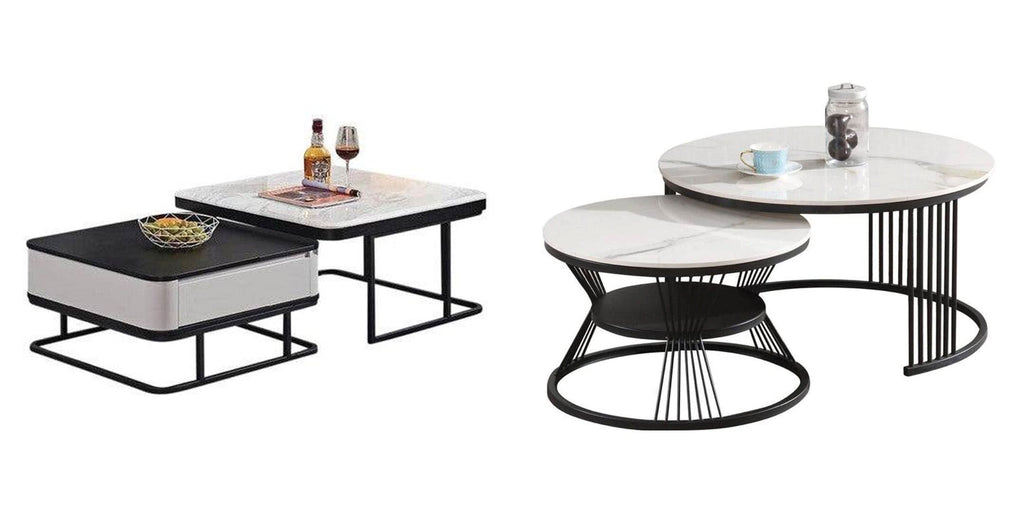
Start with your table shape. A rectangular coffee table suits most sofas because it gives a long surface for trays, books and cups. A round coffee table softens a compact layout and is easier to move around. A nesting coffee table is practical for smaller living rooms because the extra surface only comes out when you need it. Browse coffee tables for Singapore living rooms if your current table is too small, too bulky or simply wrong for the way you use the room.
Before you style, get the spacing right
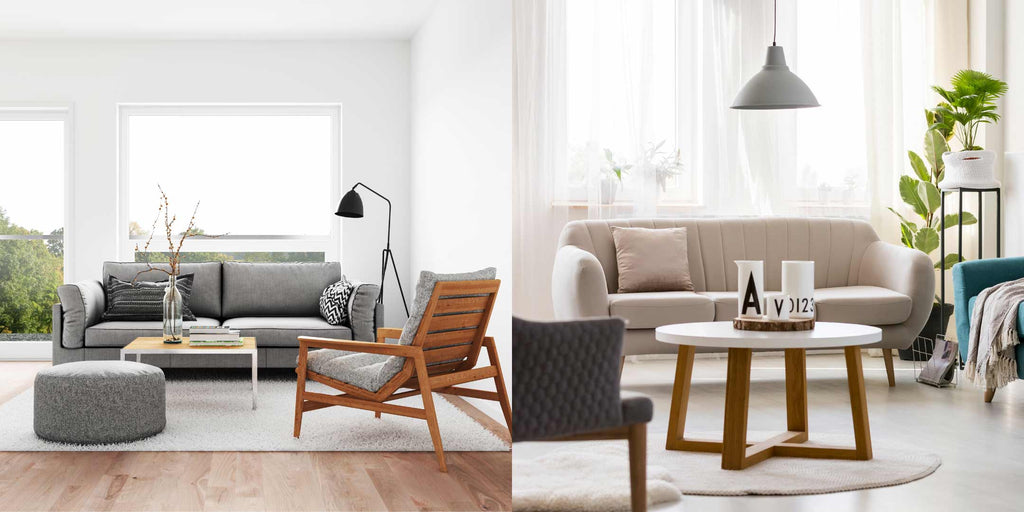
Leave around 30-45 cm between your sofa and coffee table. That gap is close enough for a drink, but wide enough for knees and walking space. If you keep knocking the table when you stand up, the issue is not your styling. The table is too close, too large, or both.
For the most natural look, match the scale of the table to the sofa. A compact two-seater sofa does not need a heavy block-like table. A wider sofa can handle a broader surface, especially if you host often. If your coffee table sits beside a textured rug, cushions or a statement sofa, keep the tabletop simpler so the whole living room does not feel busy.
Both showrooms are open daily. Sitting on the sofa, checking table height and seeing the finish in person is underrated. So is knowing exactly where to go if a drawer runner loosens or a surface arrives damaged.
25 coffee table design ideas that still leave room for living
1. Use a tray as your styling boundary
A tray tells the eye where the coffee table decor begins and ends. It also makes cleanup faster when guests arrive. Use it for coasters, a small vase, remote controls or a candle that is decorative rather than burning during daily use.

2. Mix tall, medium and low pieces
A flat row of same-height items looks stiff. Pair a low bowl with a short stack of books and one taller piece, such as a slim vase. Keep the tallest item away from the TV sightline.
3. Try the rule of thirds
Divide the tabletop visually into three sections. Style one or two sections and leave the rest open. This keeps the table balanced without filling every corner.

4. Decorate only one side
If you entertain often, style one side and keep the other side free for drinks, snacks or board games. This is a realistic layout for homes where the living room is used daily.

5. Keep to a tight colour palette
Choose two main colours from your living room and repeat them on the table. Beige books, a black tray and warm wood accents can connect a neutral sofa to a darker TV console.

6. Warm up a wooden coffee table
Wood already brings texture, so do not cover the whole surface. Add a woven tray, a ceramic bowl or a small plant. Use coasters and avoid leaving damp items directly on the surface.

7. Style black and white with texture
Black and white coffee table decor can look sharp, but it needs texture. Use matte ceramics, ribbed glass, woven details or a stone-look tray.

8. Add greenery, but keep it manageable
A small plant or fresh stems can soften a modern living room. Choose a pot that matches the table scale, and keep delicate items away from strong afternoon sun.

9. Stack books with intention
Coffee table books work best when they are not treated as filler. Stack two or three, then place a small object on top. Personality beats random decoration.
10. Add one personal object
A souvenir, small sculpture or handmade bowl makes the table feel like yours. Keep it to one clear object so the table does not turn into a display shelf.

11. Use storage, but do not hide clutter forever
A storage coffee table is helpful for remotes, coasters, chargers and small living room items. The trade-off is simple: hidden storage only works if you edit it regularly.
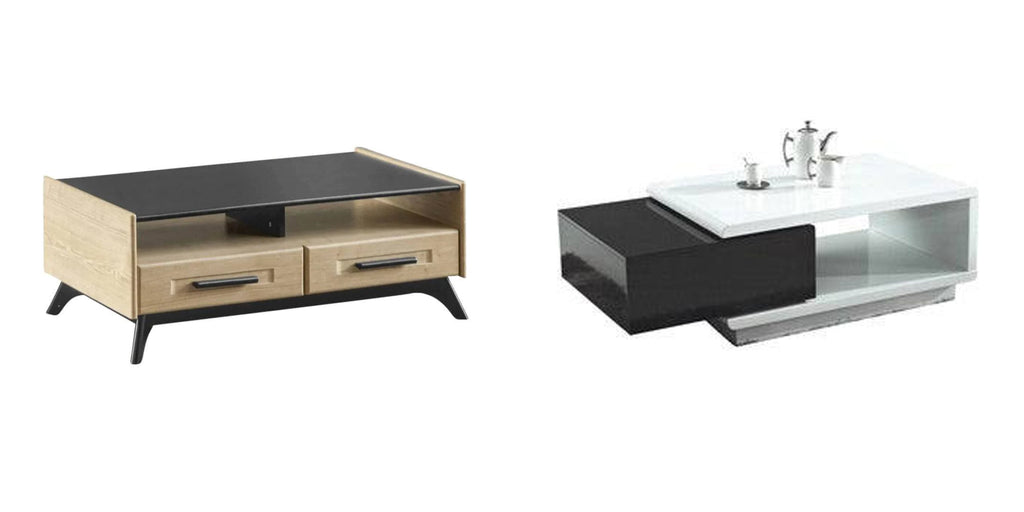
12. Choose nesting tables for compact homes
Nesting tables are useful when your living room shifts between quiet evenings and visitors. Keep the smaller table tucked in, then pull it out when snacks and drinks need extra space.

13. Keep low tables visually light
Low coffee tables already make a room feel relaxed. Keep decor low too, such as bowls, books and shallow trays. Tall vases can look awkward on a low table.

14. Let glass tables breathe
A glass coffee table helps a small room feel more open, but clutter shows quickly. Use a tray or two neat objects and keep the lower view clear.

15. Respect marble and sintered stone surfaces
Marble has natural patterning, so it does not need heavy styling. Sintered stone is more forgiving because it resists scratches, heat and stains, while marble is porous and needs more careful upkeep.

16. Give a two-tier coffee table clear roles
Use the top tier for daily items and the lower tier for neat storage. Books, trays and baskets work well below. Loose wires and old receipts do not.
17. Use jars and baskets for snacks
If your living room doubles as the family snack zone, make it neat. Clear jars, lidded boxes or small baskets keep treats accessible without making the table look messy.

18. Add a table runner for softness
A runner works well on a plain rectangular table. Choose texture rather than loud print if the room already has patterned cushions or a rug.

19. Make coasters part of the design
Coasters are not glamorous, but they do real work. Choose stone, cork, leather-look or woven coasters that match the table finish.
20. Style for hosting
For homes that host often, place board games, conversation cards or a small snack tray where people can reach them. The point is to make the living room easier to enjoy.

21. Use a reflective accent carefully
A mirrored tray, metal bowl or glass vase can brighten a darker living room. One reflective piece is enough, especially under strong ceiling lights.
22. Change one item with the season
You do not need to restyle the whole table. Change one detail, such as flowers, a bowl, a festive accent or a book on top of the stack.

23. Pair the table with an ottoman or stool
If you need flexible seating, an ottoman or stool near the coffee table can make the living room more useful. See ottomans and stools if your living room needs extra seating without adding another armchair.
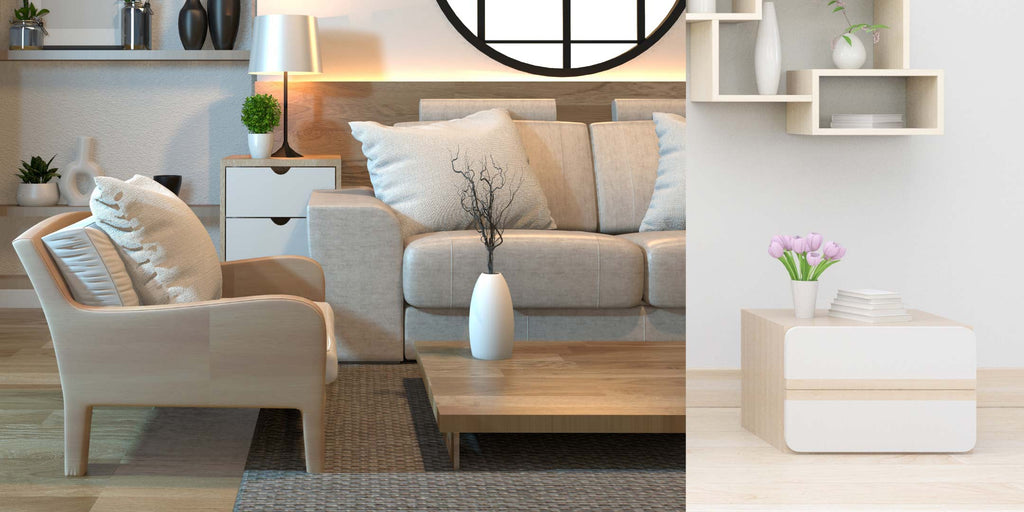
24. Let the sofa and cushions guide the styling
Your coffee table should not fight your sofa. If the sofa is bold, keep the table calm. If the sofa is simple, add texture through books, trays and nearby soft furnishings. You can pair the table with sofas for everyday living and throws and cushions to build a living room that feels connected.

25. Reset the table once a week
The easiest styling habit is a weekly reset. Remove cups, receipts, toys and loose cables. Put back only what earns its place.
Coffee table decor mistakes to avoid
- Using decor that is too tall: if it blocks the TV or conversation, it belongs somewhere else.
- Filling every corner: empty surface is part of the design, especially in compact flats.
- Ignoring material care: use coasters on wood and marble, and wipe spills quickly.
- Choosing fragile pieces for busy homes: if you have young children or pets, avoid delicate glass decor near table edges.
- Buying decor before the table: table size, shape and finish should decide what goes on top.
How to choose the right coffee table for your decor style
| Living room style | Coffee table choice | Decor direction |
|---|---|---|
| Minimalist | Slim table with a clean silhouette | One tray, one book stack and plenty of open surface |
| Warm modern | Wood, stone-look or mixed-material table | Ceramic bowl, soft textiles and natural textures |
| Compact HDB | Round, nesting or storage coffee table | Low decor, fewer pieces and easy-to-move trays |
| Family living room | Stable table with practical storage | Coasters, lidded storage, books and fewer fragile items |
| Hosting-friendly | Wider surface or two-tier table | Snack tray, board games and one decorative anchor |
A growing share of Mega Furniture's furniture range now comes from its own factories in Batu Pahat, Johor and Foshan, Guangdong, both operational since late 2025. Quality checks happen in-house before pieces ship to Singapore, where delivery and professional assembly are handled locally. It is not the whole range yet, but the programme is expanding through 2028.
FAQs about coffee table design ideas
How do I decorate a coffee table without making it look cluttered?
Use one tray as the main styling zone and leave at least part of the tabletop empty. A small stack of books, a low bowl and coasters are usually enough for a practical living room.
How much space should I leave between my sofa and coffee table?
Leave around 30-45 cm between the sofa and coffee table. This gives enough room to walk through while keeping drinks, remotes and snacks within easy reach.
What should I put on a small coffee table?
Choose low, compact items such as a tray, coasters, one small plant or two books. Avoid tall vases and large bowls because they can overwhelm the surface and block the view across the room.
Is a storage coffee table good for an HDB living room?
Yes, if you use the storage for daily essentials like remotes, coasters and chargers. It is less useful if it becomes a hidden clutter zone, so choose a design that is easy to open and tidy regularly.
How do I style a marble or sintered stone coffee table?
Keep the decor simple so the surface remains visible. Marble looks best with neutral accents and careful use of coasters. Sintered stone is more forgiving for busy homes because it resists scratches, heat and stains.