


Quick answer: Good interior design HDB 4 room flat planning for homeschooling families starts with zoning, not decoration. Use one main study zone, one quiet reading corner, and storage that resets the home quickly at the end of the school day. A 4 room HDB 4A floor plan is usually flexible enough for this, but only if the living room, bedrooms, and dining area are not all asked to do everything at once.
Your first child is starting school at home, and the dining table has quietly become a classroom, art station, office desk, and snack counter. The problem is not that the flat is too small. The problem is that the flat has not been told which corner does which job.
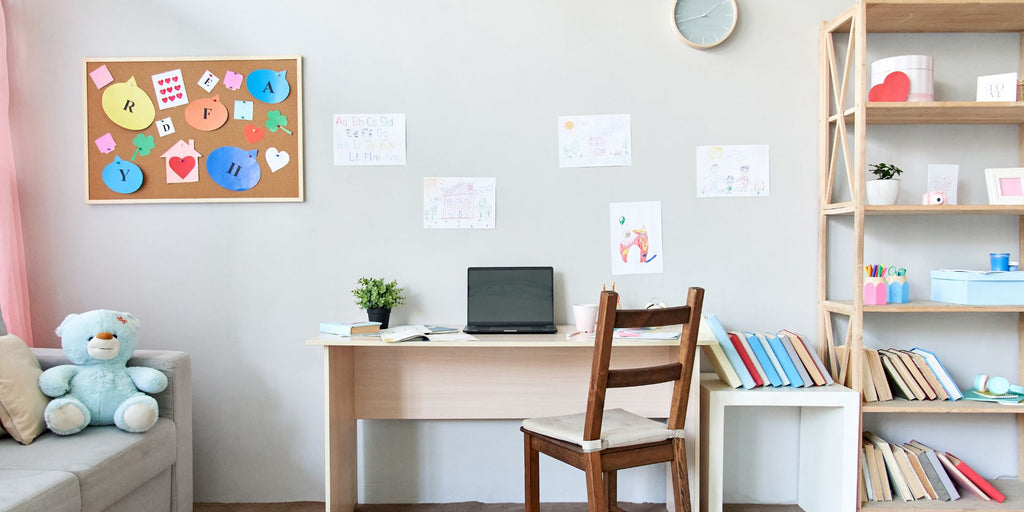
How do you plan interior design HDB 4 room flat layouts for homeschooling?
Plan a homeschooling flat by dividing the home into learning, storage, rest, and family zones. A 4-room HDB flat is approximately 90 sqm, which gives more flexibility than a compact 3-room flat but still needs careful furniture choices. Every area should have a main role, with secondary uses kept simple.
In a homeschooling setup, the biggest mistake is turning the whole home into a classroom. That sounds flexible at first. By week two, books appear on the sofa, worksheets live on the dining table, and stationery somehow reaches the bedroom floor.
If you need a proper learning surface, start with study tables for focused learning. For tighter rooms, compare small study tables for compact HDB rooms before committing to a full desk.
Start with the 4 room HDB 4A floor plan

A 4 room HDB 4A floor plan usually gives you a living and dining area, kitchen, service yard, common bathroom, household shelter, master bedroom, and two common bedrooms. The exact layout varies by block, age, and whether the flat is BTO or resale, so do not design from memory. Work from your actual floor plan.
For homeschooling, decide which room carries the main learning load. A common bedroom can become a study room if both children can share a bedroom. The living room can become the flexible learning zone if you need all bedrooms for sleeping. The dining area can work for supervised lessons, but it should not become permanent storage.
| Area in the flat | Best homeschooling use | What to avoid |
|---|---|---|
| Living room | Group reading, parent-led lessons, project work, online classes | Leaving school items on the sofa and TV console all day |
| Dining area | Writing, worksheets, crafts, supervised assignments | Using the dining table as the only storage zone |
| Common bedroom | Quiet study room, reading room, or shared children’s room | Overfilling it with bulky desks, beds, wardrobes, and open shelves |
| Master bedroom | Parent work corner or quiet admin area | Letting work papers and school files take over the sleeping zone |
| Household shelter | Bulk school supplies, books, files, and project materials | Storing daily-use learning materials too far away |
Choose one main study zone
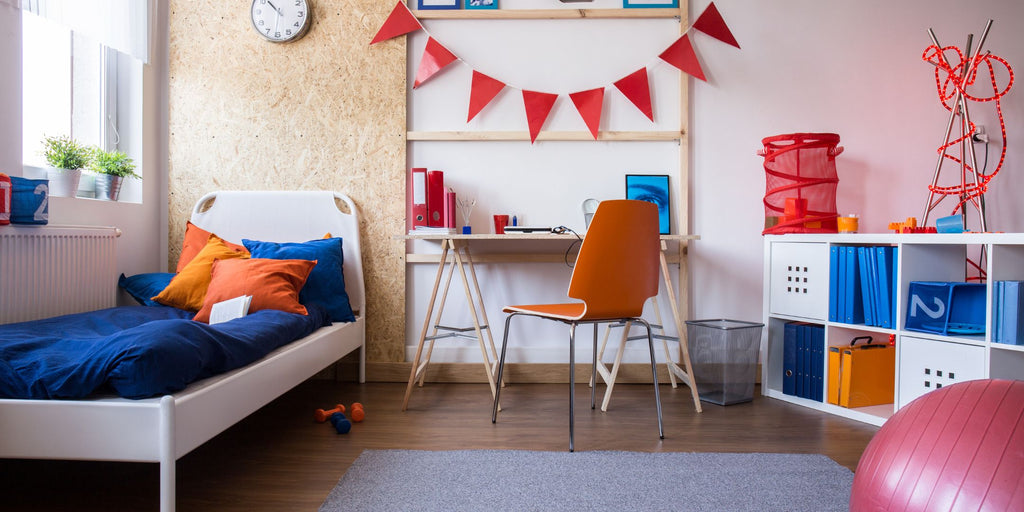
One proper study zone is better than five half-zones. Put the main desk where there is enough light, a power point nearby, and room for a chair to pull out. Avoid placing the desk where children need to face constant TV movement, kitchen traffic, or the main door.
For one child, a compact desk with a small hutch or side storage can be enough. For two children, use separate desks if they distract each other easily. If they work well together, a longer table can function as a shared learning surface.
The best homeschool desk is not the biggest one. It is the one your child can return to every morning without clearing yesterday’s mess first.
Use vertical storage for books and supplies

Homeschooling creates paper. It also creates art materials, readers, worksheets, craft tools, flashcards, science kits, chargers, headphones, and many small things that do not look messy until they gather in groups.
Use vertical storage to keep the floor clear. A tall bookshelf, wall shelf, or cabinet can hold more than a low storage bench while using less floor area. Keep daily-use books within the child’s reach, and keep sharp tools, messy craft items, and bulk refills higher or behind doors.
If the learning zone needs a book wall, browse bookshelves and display storage. If you need closed storage for supplies, compare storage cabinets for school and home items.
Make the dining table work without becoming the classroom forever
The dining table is useful for handwriting, crafts, project boards, and parent-guided lessons because it gives a wide surface and easy supervision. But it should reset for meals. That reset is what keeps the home feeling like home.
Use trays, portable caddies, or labelled boxes for lesson materials. When school ends, the child packs the caddy and the table returns to dining. This habit matters more than the organiser itself.
If the dining table is used for school, keep a wipeable mat nearby and avoid storing heavy books on the tabletop. A table that has to serve both lunch and science experiments needs protection, not just enthusiasm.
Use multipurpose furniture, but only where it solves a real problem
Multipurpose furniture is helpful in a 4-room flat, but it should not be used as a magic answer for every corner. Choose it when the secondary function is genuinely useful.
- Storage beds work well if children need space for bedding, toys, or school materials.
- Extendable tables are useful when the same surface handles meals and projects.
- Ottomans with storage can hold reading blankets, toys, or craft supplies.
- Foldable desks work if the child uses the space occasionally, not for long daily lessons.
- Sliding-door wardrobes are useful when door swing space is tight.
If bedrooms are short on storage, compare storage beds before adding more loose cabinets. Hidden storage works best when it holds bulky items that do not need daily access.
Plan seating for posture and attention
A proper study chair matters. Dining chairs can work for short tasks, but they are not always right for long reading, online classes, or writing sessions. Children need a seat that lets their feet rest properly, keeps the table at a comfortable height, and supports focus without becoming a toy.
For parent work corners, choose an office chair that fits the room and tucks under the desk. A large executive chair may feel comfortable, but in a compact bedroom corner, it can block wardrobe access and make the room look crowded.
Leave around 70-90 cm for main walkways where possible. Chair clearance matters too. A desk is not practical if the chair cannot pull out without hitting the bed or wardrobe.
Keep the living room calm
The living room should support learning without losing its evening role. Use a small shelf, low cabinet, or basket system for materials used in the living area. Keep the TV console as a TV console, not a storage spillover for every subject.
Soft rugs, bean bags, and floor cushions can create a reading corner, but keep them easy to move and clean. For younger children, avoid turning the floor into permanent storage. Floor space is precious in a 4-room HDB flat because it is also play space, exercise space, and the easiest route through the home.
Use light and sound thoughtfully
Place study areas where there is enough light, but avoid harsh direct afternoon sun on books, screens, and furniture. West-facing HDB units receive strong UV in the afternoon, which can fade upholstery and dry out wood surfaces over time. Curtains or blinds help the space stay usable.
Sound is just as important. A study corner beside the TV may work for crafts, but it is poor for reading and online lessons. If the home is busy, use a quiet bedroom corner for focused work and keep the living room for shared activities.
Who should avoid a full homeschool room renovation?
A full dedicated homeschool room may not be the best choice if your children are young, need supervision, or use different learning setups throughout the day. It can also be unnecessary if one child studies best near a parent while another needs a quiet room.
In many 4-room flats, flexible zones work better than one formal classroom. Renovate heavily only when you are sure the learning arrangement will last for several years. Otherwise, use movable desks, cabinets, and chairs that can adapt as the children grow.
Before you order furniture for a 4-room HDB homeschooling setup

- Measure the actual room, not only the 4 room HDB 4A floor plan.
- Check lift opening, corridor turns, main door, and room door before ordering large items.
- Leave chair clearance for every desk and study table.
- Keep daily learning materials within reach and bulk supplies in closed storage.
- Plan power points for laptops, lamps, printers, routers, and charging stations.
- Avoid blocking windows, wardrobe doors, and the main walkway.
Assembly is handled professionally on delivery. If something arrives damaged, the team at +65 6950-2657 sorts it, not a chatbot and not a returns form sent to an address outside Singapore. That matters when desks, beds, shelves, and storage cabinets all have to work together in a compact homeschooling layout.
Final thoughts on interior design HDB 4 room flat homeschooling layouts
Interior design HDB 4 room flat planning for homeschooling families works best when the home still feels like a home after lessons end. Use the actual floor plan, choose one main study zone, keep storage close to where learning happens, and let flexible furniture do the work only where it genuinely helps.
A growing share of Mega Furniture's furniture range now comes from its own factories in Batu Pahat, Johor and Foshan, Guangdong, both operational since late 2025. Quality checks happen in-house before pieces ship to Singapore, where delivery and professional assembly are handled locally. It is not the whole range yet, but the programme is expanding through 2028.
Frequently Asked Questions
How do I design a 4-room HDB flat for homeschooling?
Start with zoning. Choose one main study area, one reading or quiet corner, and one storage system for school materials. Keep the dining table flexible so it can return to meal use after lessons.
What should I check in a 4 room HDB 4A floor plan?
Check room sizes, door swings, window locations, power points, wardrobe positions, and the distance between study zones and storage. The exact 4A layout varies, so use the actual floor plan before buying furniture.
Is the dining table suitable for homeschooling?
Yes, the dining table can work for supervised writing, crafts, and project work. Use portable storage so school items can be packed away quickly before meals.
What furniture is best for homeschooling in a small HDB flat?
Choose compact study tables, chairs that tuck in properly, bookshelves, closed storage cabinets, storage beds, and flexible tables. Avoid oversized desks and open shelving that becomes visual clutter.
Should I renovate one room into a full homeschool classroom?
Only do it if the learning setup will last for several years and your children can study independently there. For many families, flexible zones across the living room, dining area, and one bedroom work better.