


If your aircon is not turning on, check the remote batteries, power switch, circuit breaker, timer setting, mode setting, and aircon isolator before assuming the unit has failed. Stop using the unit and call a qualified technician if the breaker keeps tripping, you smell burning, see water near electrical parts, hear grinding, or suspect refrigerant, motor, capacitor, or wiring problems.
You have got the BTO keys, the bed is finally in place, and the bedroom aircon chooses that exact night to stay silent. Before panic-buying a new unit, work through the safe checks first.

Why is my aircon not turning on?
Your aircon may not be turning on because the remote is not sending a signal, the unit has no power, the circuit breaker has tripped, the timer has been set wrongly, the filter is badly clogged, or an internal component has failed. Some causes are safe for homeowners to check. Others need a technician.
For most Singapore homes, the first five minutes should be spent on the simple checks. After that, do not keep pressing buttons, resetting breakers, or opening panels. An aircon that repeatedly refuses to start is usually asking for proper servicing, not more remote-control guessing.
| Symptom | Safe first check | What it may mean |
|---|---|---|
| No lights on indoor unit | Check power switch, isolator, and breaker | No power reaching the unit |
| Remote display is blank | Replace remote batteries | Remote is not sending commands |
| Remote works but aircon stays off | Check timer, mode, temperature, and signal path | Setting issue or receiver fault |
| Breaker trips again after reset | Stop using the unit | Possible electrical or component fault |
| Unit hums but fan does not start | Switch off and call a technician | Possible motor, capacitor, or internal fault |
| Unit starts, then stops quickly | Check filter and airflow, then seek servicing if it repeats | Possible overheating, airflow, sensor, or system fault |
Browse air conditioners in Singapore if your existing unit is old, unreliable, or no longer worth repeated repairs.
Aircon not working: safe checks before calling a technician

If the aircon is not working, start with checks that do not involve opening the unit, touching wiring, or handling refrigerant. These are simple, but they solve more problems than people expect.
1. Check the remote control
Replace the remote batteries first, especially if the screen is blank or faint. Then point the remote directly at the indoor unit and make sure nothing blocks the signal. If the remote has been dropped, damaged, or exposed to moisture, it may need replacement.
2. Check the mode and temperature
Set the aircon to Cool mode, usually shown by a snowflake icon. Set the temperature lower than the current room temperature. If the unit is in Fan, Dry, Timer, or Auto mode, it may not behave the way you expect.
3. Check the timer setting
A timer setting can stop the unit from turning on immediately. Cancel the timer and try again. This is especially common when someone used the remote the night before and forgot the timer was still active.
4. Check the power switch and isolator
Many homes have a wall switch or isolator for the aircon. Make sure it is switched on. If you recently cleaned the room, moved furniture, or had renovation work done, someone may have switched it off without realising.
5. Check the circuit breaker once
If the breaker has tripped, you may reset it once. If it trips again, stop. Repeated tripping can point to an electrical fault, compressor issue, motor issue, or wiring problem. Do not keep forcing the breaker back on.
When an aircon not turning on needs professional repair
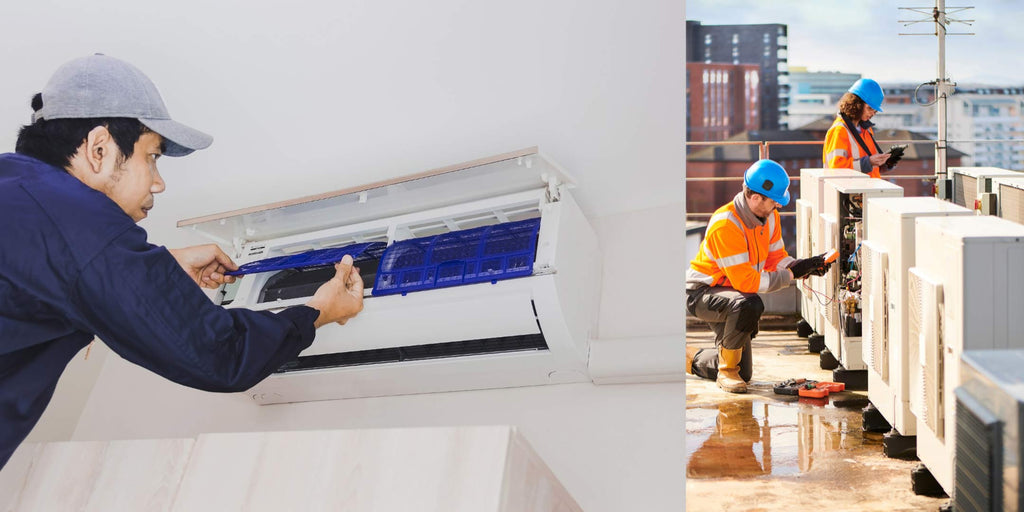
Some aircon problems should not be handled as DIY repairs. Refrigerant, capacitors, motors, compressor parts, wiring, and condenser faults need trained technicians. The original article correctly warns that refrigerant issues and dirty condenser problems should be handled professionally rather than casually opened at home.
| Problem area | What you may notice | Why to call a technician |
|---|---|---|
| Capacitor | Unit struggles to start, hums, or shuts off | Electrical component testing is not a homeowner task |
| Motor | Grinding noise, fan not spinning, weak airflow | Motor and fan issues can worsen if forced |
| Refrigerant | Poor cooling, icing, hissing, or suspected leak | Refrigerant handling must be done by trained professionals |
| Condenser | Outdoor unit dirty, hot, noisy, or not running | Outdoor components need safe access and correct cleaning |
| Wiring or breaker | Repeated breaker trips, burning smell, sparks | Electrical faults can be dangerous |
Do not open the indoor or outdoor unit to check electrical parts. Switch the system off and arrange servicing if the problem goes beyond the remote, timer, power switch, filter, or breaker check.
Aircon starts but stops quickly
If the aircon starts and then stops quickly, the issue may be airflow, overheating, sensor behaviour, a dirty filter, or a deeper system fault. Clean the accessible filter only if the manual allows it and the unit is safely switched off. Let the filter dry fully before reinstalling.
If the unit still stops again, call for servicing. A unit that keeps starting and stopping can use more energy, cool poorly, and put more strain on components.
Aircon not cooling is different from aircon not turning on
An aircon that will not turn on is a power, control, or internal-start problem. An aircon that turns on but does not cool has a different fault path. It may involve dirty filters, blocked airflow, incorrect mode, dirty coils, low refrigerant, outdoor unit issues, or an undersized system for the room.
This difference matters because the fix is different. If lights and fan operation are normal but the room stays warm, focus on cooling performance and servicing. If nothing responds at all, focus on power, remote, breaker, and control checks first.
Browse air cooling and air care products if your main issue is airflow support in warm rooms rather than a failed aircon unit.
Should you repair or replace an aircon that is not working?

Repair makes sense if the unit is fairly new, the fault is minor, and the system still cools well after servicing. Replacement makes more sense if repairs are frequent, electricity bills have climbed, the unit is noisy, leaks return, smells persist, or the system no longer cools the room properly.
The original article mentions using repair cost against new-unit cost as a practical benchmark. Keep that idea, but treat it as a guide rather than a fixed rule. A cheaper repair may still be a poor decision if the unit is old, inefficient, and likely to fail again soon.
| Choose repair if | Consider replacement if |
|---|---|
| The issue is minor and isolated | The unit has needed repeated repairs |
| The aircon still cools well after servicing | Cooling feels weak even after cleaning |
| The unit is still reasonably efficient | Power use feels high for the cooling you get |
| Parts and servicing are straightforward | Parts are hard to get or repair cost is high |
| The installation route is still suitable | The current system no longer suits the room layout |
For one bedroom or study, compare System 1 air conditioners. For daily-use rooms where energy efficiency matters, compare 4-tick air conditioners and check the model specifications before deciding.
Before buying a replacement aircon

If replacement is the better route, do not choose by price alone. Check the room size, sun exposure, installation route, drainage, condenser placement, noise level, energy label, and servicing access. A west-facing bedroom may need more careful planning than a shaded room used only occasionally.
- Check whether you need one room cooled or several rooms cooled.
- Confirm where the indoor unit will be mounted.
- Plan trunking and drainage before wardrobes or built-ins are fixed.
- Check outdoor condenser placement and servicing access.
- Compare energy rating and annual energy consumption where available.
- Check warranty, installation, and after-sales support before ordering.
Every order ships locally, and after-sales support is handled from Singapore. Complimentary delivery and professional installation are available on qualifying orders. The team is reachable at +65 6950-2657, Monday to Friday, 9am to 6pm.
Final thoughts on an aircon not working
If your aircon is not turning on, begin with the safe basics: remote batteries, Cool mode, timer, power switch, isolator, and breaker. Then stop. If the breaker trips again, the unit smells burnt, makes grinding noises, leaks near electrical parts, or refuses to start after the simple checks, call a technician. The best repair is the one that solves the fault safely. The best replacement is the one that fits the room, installation route, and long-term running cost.
FAQs about aircon not turning on
Why is my aircon not turning on even with the remote?
Your aircon may not be turning on because the remote batteries are weak, the timer is active, the unit has no power, the breaker has tripped, or the indoor receiver is not responding. Check the remote and power first.
What should I do if my aircon is not working after a power trip?
Switch the unit off, check the breaker, and reset it only once. If it trips again, stop using the aircon and call a qualified technician because repeated tripping can indicate a fault.
Can low refrigerant cause an aircon not working problem?
Low refrigerant is more commonly linked to weak cooling, icing, or system faults rather than a simple remote issue. Refrigerant checks and repairs should be handled by trained professionals.
Should I reset my aircon if it will not turn on?
You can try a safe reset by switching the unit off, waiting a few minutes, and turning it on again if your manual allows it. Do not keep resetting if the breaker trips or the unit behaves abnormally.
When should I replace an aircon instead of repairing it?
Consider replacement if repairs are frequent, cooling remains weak after servicing, electricity use is rising, leaks or smells keep returning, or the repair cost is no longer sensible for the unit's age and condition.