


Quick answer: The right cooker hood depends first on your kitchen layout, then on how heavily you cook. For many Singapore BTO and HDB kitchens where external ducting is limited, a slim, telescopic, or recirculating cooker hood is usually the most practical choice. If your kitchen can support ducting and you cook often with oil, smoke, and strong aromas, an extraction hood will usually do the tougher job better.
The renovation is nearly done, the cabinets are up, and the hob has finally been chosen. Then the contractor asks what type of kitchen hood you want, and suddenly there is one more decision standing between you and a finished kitchen.
Your cooker hood helps pull smoke, grease, steam, and cooking smells away from your hob. It also protects your backsplash, cabinets, and open living area from the oily film that builds up when cooking fumes have nowhere to go. In a compact flat or open-concept condo kitchen, this is not a small detail. It changes how the whole home feels after dinner.
Is a Cooker Hood Necessary in Singapore?

Most Singapore homes benefit from a cooker hood, especially if you cook with oil, stir-fry often, or have an open kitchen facing the dining or living area. Without one, smoke and odours spread quickly, and grease settles on nearby cabinets, wall tiles, and surfaces.
Light cooking may not demand the most powerful hood on the market. For daily frying, grilling, steaming, and wok cooking, a proper kitchen hood earns its place. It keeps the space easier to clean and helps the kitchen feel less stuffy after cooking.
Extraction vs Recirculation Cooker Hood
Extraction Cooker Hoods

Extraction cooker hoods pull grease, smoke, steam, and cooking smells from your kitchen, then vent the air outside through ducting. This is usually the stronger option for serious cooking because the air is removed instead of filtered and returned into the room.
This type needs a ducting route, so it may not suit every HDB, BTO, or condo layout. It can also be louder because the motor works harder to move air out of the home.
Best for: These suit homeowners who cook often, use high heat, and have a kitchen layout that allows ducting.
Watch for: Installation limits, ducting placement, noise level, and professional setup requirements should be checked before buying.
Recirculating Cooker Hoods

Recirculating cooker hoods pull in cooking air, pass it through filters, then release the cleaned air back into the kitchen. This type does not need ducting, which makes it easier to fit into many compact Singapore kitchens.
This option is practical when external venting is not possible. The honest trade-off is filter maintenance. Grease and charcoal filters need cleaning or replacement, and the hood may not remove heat and moisture as well as an extraction model.
Best for: These suit flats, condos, and smaller kitchens where ducting is difficult or not allowed.
Watch for: Filter replacement costs, humidity, and lower smoke removal compared with ducted extraction should be considered.
Types of Cooker Hoods in Singapore
Chimney Cooker Hood

The chimney cooker hood is mounted on the wall above the hob. It has a visible vertical section that gives it a strong kitchen feature look. Some models work with ducting, while others can be set up for recirculation.
Choose a chimney hood if your kitchen wall has enough space and you want the hood to be part of the design. It suits larger kitchens, open layouts, and homes where the cooking zone is meant to stand out.
Slim Hood
The slim hood is a low-profile kitchen hood that sits close to the wall or under the cabinet. It works well in smaller kitchens because it gives ventilation without taking up too much visual space.
For most compact HDB kitchens, a slim hood is the safe first shortlist because it is simple, practical, and easier to fit around upper cabinets. It may not be as powerful as a large chimney hood, but it makes sense for everyday cooking in a tight layout.
Angled Cooker Hood
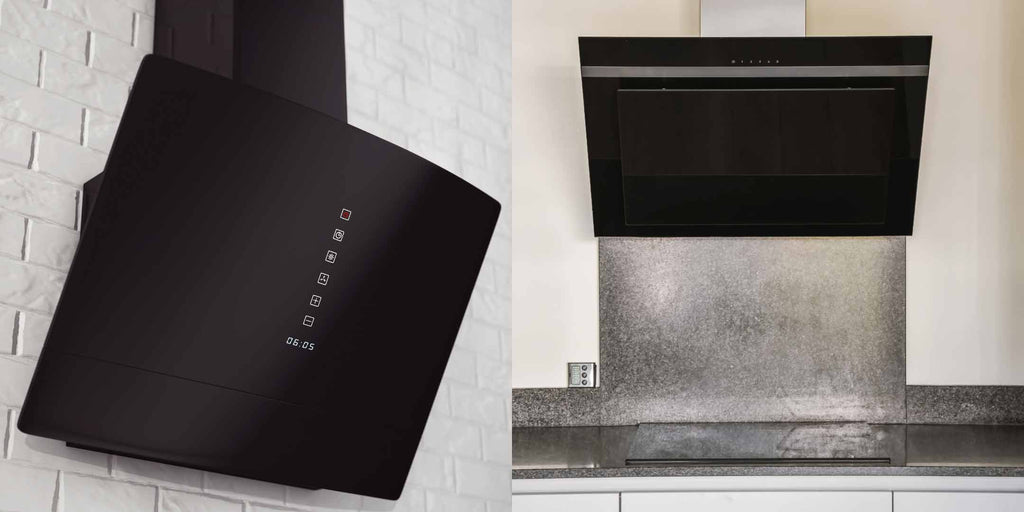
The angled cooker hood is a wall-mounted hood with a slanted front. It gives more headroom over the hob, which is helpful if a standard hood feels too close while cooking.
This type works well in modern kitchens where the hood is visible. It is also a good choice for taller users who dislike leaning under a flat hood while cooking.
Conventional Cooker Hood

The conventional cooker hood, sometimes called a visor hood, is usually mounted under a cabinet or directly on the wall. It has a simpler look than chimney and angled hoods.
This is a practical choice for homeowners who want basic ventilation without making the hood a design feature. It suits smaller kitchens and rental homes where the setup needs to stay straightforward.
Telescopic Cooker Hood

The telescopic cooker hood stays tucked under the cabinet and slides out when in use. Once cooking is done, it slides back in and keeps the kitchen looking tidy.
This is one of the better choices for compact BTO and condo kitchens where cabinet space matters. It gives you a working hood without making the upper cabinets feel crowded.
Island Cooker Hood

The island cooker hood is suspended from the ceiling above a hob placed on a kitchen island. It has to capture fumes without the help of a back wall, so size and placement matter more.
Choose this only if your hob is on an island or peninsula. It suits larger open kitchens, but it needs careful installation because the hood becomes part of the room’s main sightline.
Downdraft Cooker Hood

The downdraft cooker hood pulls fumes downward or sideways from the hob area instead of drawing air upward. Some models sit hidden in the countertop and rise when needed.
This style suits minimalist kitchens where the homeowner wants a clean overhead view. It is usually more complex to install, so it is best planned early with the kitchen contractor.
Ceiling Cooker Hood

The ceiling cooker hood sits flush or near-flush with the ceiling. It keeps the cooking area visually open, which can be useful in larger kitchens and open-plan homes.
Because it sits farther from the hob, placement and extraction power matter. This is not the most practical choice for every flat, but it can work well in planned renovation layouts with enough ceiling space.
How to Choose Kitchen Hood for Your Home
| Kitchen situation | Best cooker hood type to consider | Why it works |
|---|---|---|
| Small HDB or BTO kitchen | Slim hood or telescopic hood | Space-saving and easier to fit under cabinets |
| Open-concept kitchen | Chimney, angled, or strong recirculating hood | Helps control odours before they spread into the living area |
| Heavy cooking with oil and smoke | Extraction hood where ducting is possible | Removes cooking air instead of sending it back into the kitchen |
| No external venting route | Recirculating hood | Works without ducting, but filters need regular care |
| Hob on kitchen island | Island hood | Designed to sit above an island cooking zone |
| Minimalist kitchen design | Downdraft or ceiling hood | Keeps the upper kitchen view cleaner |
Start with the layout, not the look. If ducting is possible and you cook heavily, choose extraction. If ducting is not practical, choose recirculation and commit to filter maintenance. If space is tight, shortlist slim and telescopic designs first.
Also check the hood width, cabinet clearance, hob position, and installation route before buying. The right kitchen hood in the wrong size or position will still disappoint.
Before You Buy a Kitchen Hood
- Check your cooking habits. Frequent frying, grilling, and wok cooking need stronger ventilation than light boiling or reheating.
- Confirm the installation type. Extraction hoods need ducting. Recirculating hoods need the right filters.
- Match the hood to the hob width. The hood should properly cover the cooking zone so fumes are captured before they spread.
- Plan around cabinets. Slim and telescopic hoods work better when upper cabinet space is limited.
- Consider noise level. Powerful hoods that are too loud may be left unused, which defeats the point.
- Think about cleaning. Grease filters, surfaces, and charcoal filters all need regular attention.
Local delivery, installation, and service support matter for appliances. Cooker hoods are not like loose countertop appliances that you can move around later. If you need help after purchase, Megafurniture’s team is reachable at +65 6950-2657, Monday to Friday, 9am to 6pm.
You can browse Megafurniture’s cooker hoods online to compare designs, sizes, and installation options for your kitchen.
Every order ships locally, and after-sales support is handled from Singapore. Complimentary delivery and professional installation are available on qualifying orders. The team is reachable at +65 6950-2657, Monday to Friday, 9am to 6pm.
Frequently Asked Questions
What type of cooker hood is best for an HDB kitchen?
For many HDB kitchens, a slim, telescopic, or recirculating cooker hood is the most practical choice. These types save space and can fit more easily around cabinets. If your kitchen allows ducting and you cook heavily, an extraction hood is worth considering.
What is the difference between extraction and recirculating cooker hoods?
Extraction cooker hoods vent cooking air outside through ducting. Recirculating cooker hoods filter the air and release it back into the kitchen. Extraction is usually stronger for smoke, heat, and odours, while recirculation is easier to install in kitchens without ducting.
Is a chimney hood better than a slim hood?
Chimney hoods are usually better for larger kitchens and homeowners who want stronger visual impact. Slim hoods are better for compact kitchens where cabinet space and a cleaner look matter more. If space is tight, a slim hood is often the more sensible choice.
Do recirculating cooker hoods need filter replacement?
Yes. Recirculating cooker hoods depend on filters to trap grease and reduce odours. Grease filters need cleaning, while charcoal filters usually need replacement based on usage and the hood model. Heavy cooking means more frequent maintenance.
Can I install a cooker hood after my kitchen renovation?
You can, but it is easier to plan the cooker hood before carpentry and electrical work are finalised. Cabinet height, power point location, ducting route, and hob position all affect the installation. Planning early reduces fitting issues later.